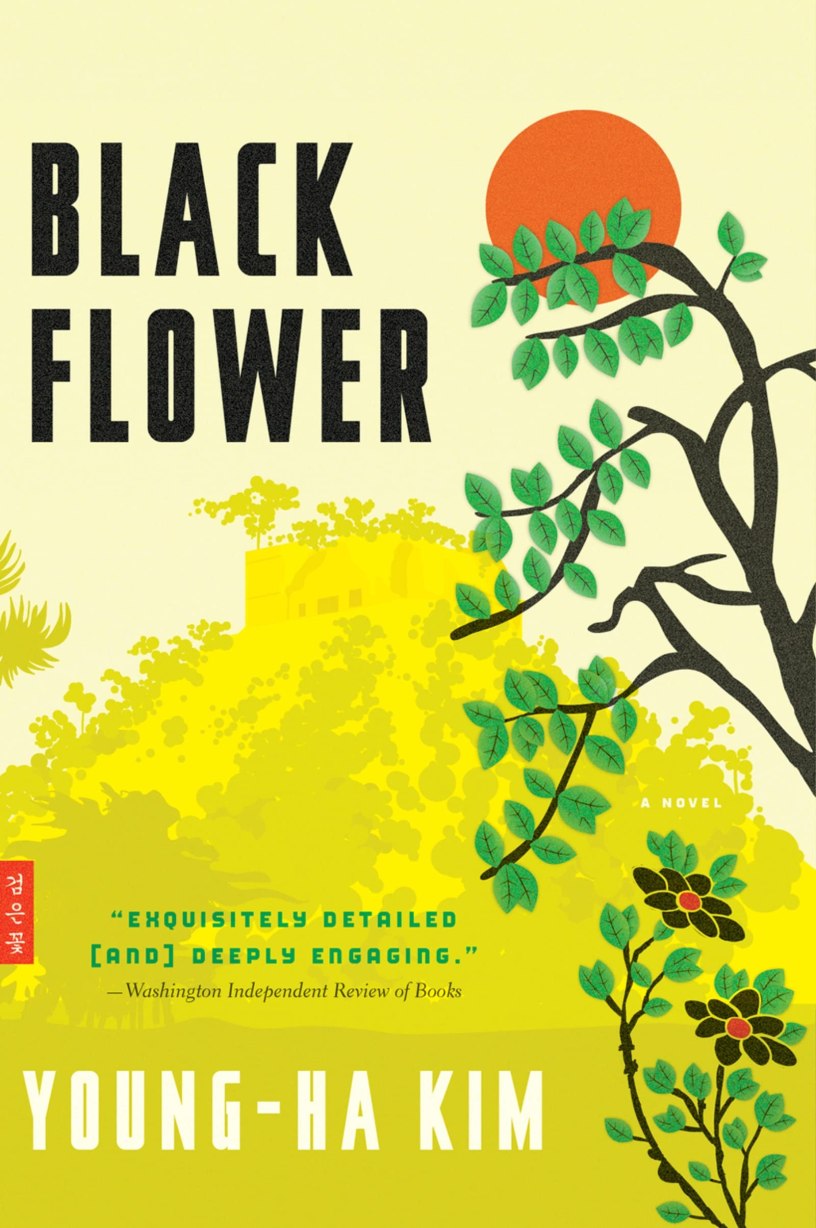
Black Flower, by Kim Young-ha
Translated by Charles La Shure
(2003, translated 2013)
Mariner Books
(Novel)
This is a historical novel about an actual event that nevertheless reads like a fever dream of magic realism. In 1905, Korea was in desperate straits. Japan had just succeeded in making Korea a protectorate. The Korean royal family had lost its authority and upper-class citizens lost their fortunes and influence. East Asia was in turmoil, and many Koreans wanted to flee. Unfortunately, the Japanese strictly limited emigration to Hawaii and the continental US. The Americans had a quota system, and because they wanted their own citizens to have priority, the Japanese prevented Koreans from seeking asylum there. Korean citizens nevertheless flocked to Jemulpo Harbor in Incheon, hoping to find any ship that could take them someplace where they could find work. Over a thousand Koreans contracted themselves to work on plantations on the Yucatan Peninsula. The powerful landowners were making fortunes from the thorny, tough henequen plants that could be harvested and processed into strong rope, but they had exhausted the indigenous Mayan workforce. They exploited the Koreans terribly, overworking them, underpaying them, and confining them to the plantations. Escape was impossible. Kim imagines the lives of the Koreans as they adjust to this barbaric way of life, creating a vibrant cast of characters from different backgrounds and taking us into their minds as they fight to survive in near-impossible circumstances. Kim’s character work is brilliant, particularly with his portrayal of a thief, a Korean shaman, and an apostate priest. Taking his cues from recent research on the plight of these displaced persons, Lee follows the collapse of the plantations and the political violence that culminates in the Mexican revolution. While some of the Koreans attempt to return to Korea or flee to Hawaii and the US, Kim follows those who start their own Korean-Mexican families, as well as those who find new work and start their own businesses. He also tracks the many Korean soldiers who fled to the Yucatan: in his mind, they join up with revolutionary forces, fighting as mercenaries in the terrible warfare that consumed Mexico in the first half of the 20th century. Some will argue that Kim may go too far with too little evidence, and incidents in the finale of the novel certainly seem to stretch the limits of believability. Nevertheless, Black Flower succeeds as a novel and provides a fascinating insight into a little-known historical event.
Her parents had taught her that she came from the ancestors, that she should live for her father and her future husband, and at the moment her life ended she would become a spirit. But she couldn’t easily accept what the women in literati households were taught and convinced of. She did not deny that she came from the flesh and bone of her ancestors. Yet she had a different idea about what she was to live for. Deep in her heart, the idea that was too dangerous for her to dare to say out loud was: I live for myself.
 East Asian Literature in Translation