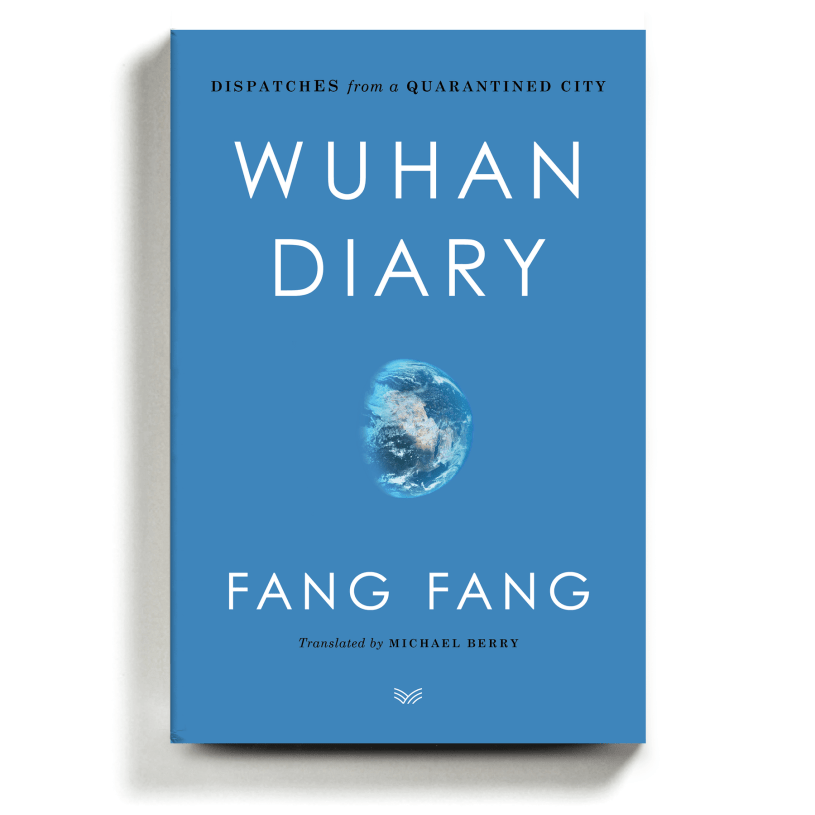
Wuhan Diary: Dispatches from a Quarantined City, by Fang Fang
Translated by Michael Berry
(2020)
Harper Collins
(Diary/Social Commentary)
On January 25 of 2020, the Chinese government announced the severity of the COVID-19 virus and ordered a total quarantine of the city of Wuhan. That night, Fang Fang, a well-known writer and resident of Wuhan, wrote a blog post responding to the news. She continued to blog about the quarantine for its duration, approximately sixty-seven days. Fang’s posts were openly critical of the delayed response of the government. According to her, twenty days were lost when medical and government inspectors insisted that the patients were suffering from no more than SARS and that there was no risk of a spread of widespread infection. Her honest outrage gained her a wide and loyal readership. Fang was fortunate to know many doctors, so she became one of the most trusted sources of information about the disease and what was happening in the hospitals. She also chronicled how she and her neighbors were surviving: how were people getting food, water, and medication? What was happening to the homeless population? And what about the impact of the timing of the lockdown? Falling on the Lunar New Year celebration, hundreds of thousands of Wuhanese were marooned outside the city, while other travelers were trapped inside. How were these people faring? Also, as the casualties began to rise, she wrote moving testimonials to the doctors and nurses who gave their lives for the people of her city. Throughout, Fang speaks with pride about the spirit of the people of Wuhan and their commitment to making so many sacrifices for the safety of their nation. But Fang also continued to hold the government accountable. She continued to reveal evidence of the early coverup right until the end. True, the Chinese government quickly pulled down her posts, but her supporters found ways to keep her posts circulating and always available. Perhaps worse, she found herself the victim of the criticism of other intellectuals and writers. Repeatedly, she engaged her critics, even though it was clear that many of the most virulent criticism was likely the work of trolls or government propaganda agents. Neither a novel nor a memoir, Wuhan Diary is a record of a time and type of thinking that is truly courageous and patriotic. Wuhan Diary shows that it is possible for a citizenry to question its government and hold it accountable while also working collectively to preserve the commonwealth.
“But what really needs to be said is that the true test of a country’s level of civility has nothing to do with building the tallest skyscraper or driving the fastest car, nor does it matter how advanced your weapons system is or how powerful your military might be; it is also not about how advanced your technology is or even your artistic achievements, and it is especially not related to how lavish your official government meetings are or how splendid your firework displays are, or even how many rich Chinese tourists you have buying up different parts of the world. There is only one true test, and that is how you treat the weakest and most vulnerable members of your society.” (157)
 East Asian Literature in Translation