The Waiting
Keum Suk Gendry-Kim
Translated by Janet Hong
Drawn and Quarterly
(2021)
Graphic Novel
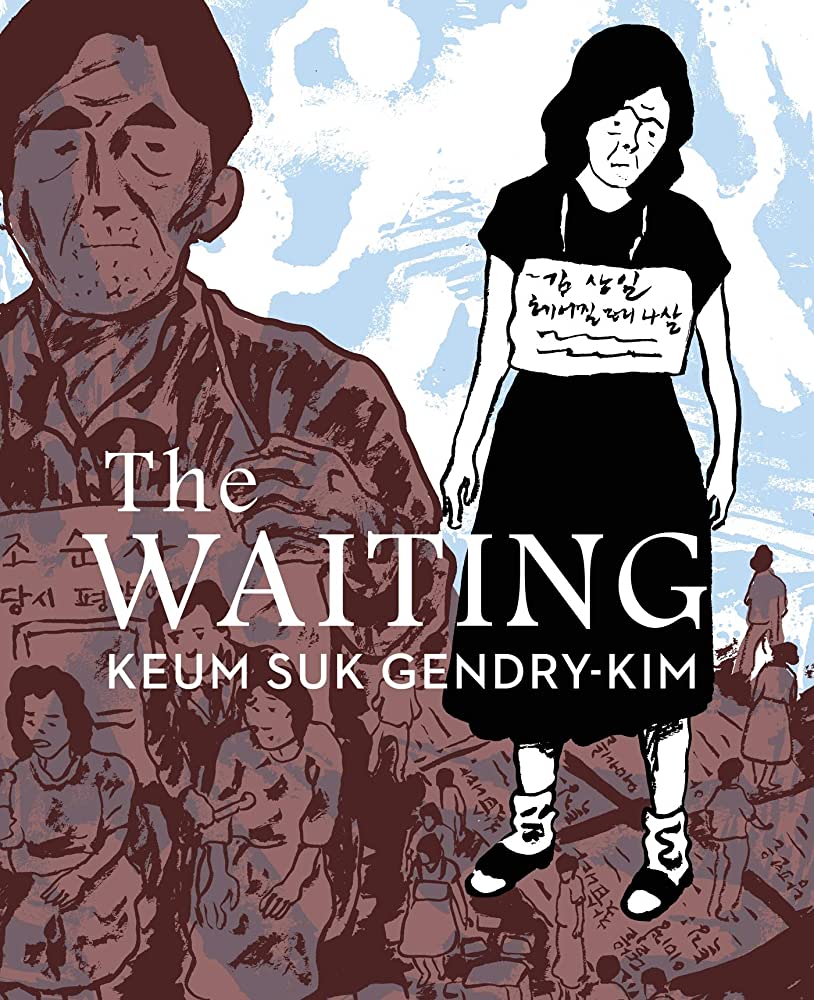
The Waiting is a complex graphic novel. The tale is partly inspired by a real-life experience: late in life, the author’s own mother explained that she had a sister from whom she was separated while fleeing the advancing communist army in Pyongyang in 1950. Gendry-Kim uses that still-aching family wound to tell of relationships that are both like and unlike those experienced by her own family. In the fictional present, Jina is a novelist. Unlike her siblings, as the last born, she has enjoyed the privilege of pursuing an education in the arts. However, though she has published many works, she is still struggling financially. Worse, from the perspective of her aging mother, she is entering middle age unmarried. Jina is struggling with her role as the family’s primary caregiver for Gwija, a woman who, despite her frailty, is determined to be independent and continue to mother her adult daughter. At this delicate juncture, Jina decides to pick up a thread her mother presented to her when she was in fifth grade: her mother and her father had each been married to different people before the war. As refugees, each was separated from their families. Gwija left behind her husband and a son named Sang-il, and her second husband also lost his own family. In one of the more understated moments in the novel, Gwija explains that she and her second married in order to survive, each pledging to divorce the other immediately should a lost spouse ever return from the North or be discovered amongst the chaos of war. The core story is absorbing and brilliantly told, but Gendry-Kim also succeeds in pulling back the camera to highlight the reality that families were broken all across Korea. She accomplishes this by demonstrating Giwja’s interest in the real-life television show Finding Dispersed Families, which gave air time to over 53,000 people and succeeded in reuniting over 10,000 families. In addition, she allows her main character, Gwija, to be among those one hundred or so South Koreans chosen by lottery who are allowed to visit family in the North for a few hours over several days. Gendry-Kim’s storytelling is gripping, swift, and powerfully emotional. As in her graphic novel, Grass, Gendry-Kim’s black-and-white illustrations leap off the page, capturing moments of paralyzing anxiety and lifelong yearning.

 East Asian Literature in Translation