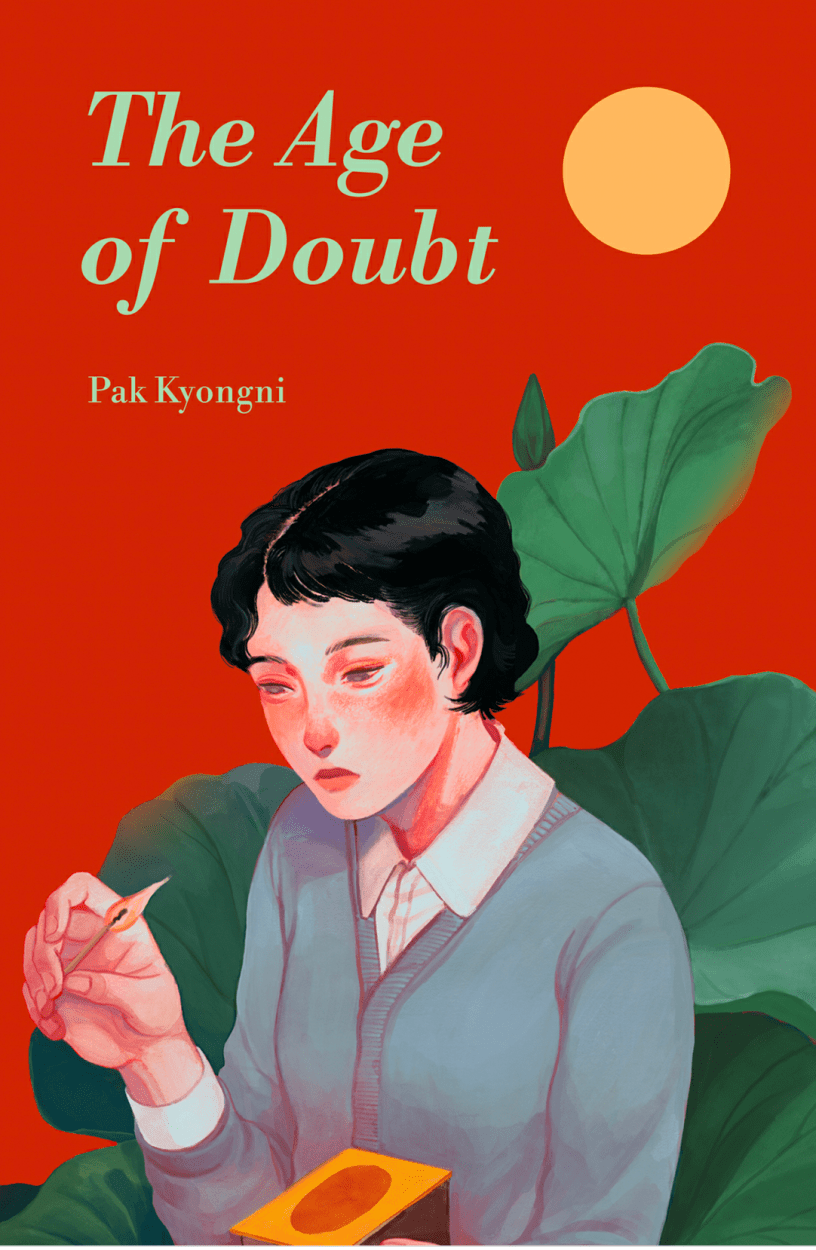
The Age of Doubt
By Pak Kyong-ni
Translated by Sophie Bowman, et al
(1955-1968, translated 2022)
Honford Star
Short Story Collection
The stories featured in Pak Kyong-ni’s The Age of Doubt are “Calculations” (1955), “Black is Black, White is White” (1956), “The Age of Darkness” (1958), “The Age of Doubt” (1957), “Retreat” (1957), “The Era of Fantasy” (1966), “The Sickness No Medicine Can Fix” (1968). Pak is one of the first to write about the post-war period from the point of view of a woman. She was a prolific writer, producing over thirty short stories and twenty-five novels, and a multivolume epic chronicling Korean history from the 18th to the 20th century. Some of the stories in this collection focus on the lives of single women, but the most interesting is told through the eyes of a young girl and young widows. In “The Era of Fantasy,” Pak tells the story of life under Japanese colonialism. The narrator is a socially awkward, introverted teenager who begins her education in a remote village and is then brought into a city to attend a school run by the Japanese. Overwhelmed by passions and conflicting emotions and almost paralyzed by low self-esteem, she suffers indignities at the hands of her peers and teachers. The only relief she finds is the beautiful face of a Japanese; in her presence, and even while thinking of her, the narrator experiences extraordinary flights of freedom and happiness. She writes the girl a letter declaring her affection for her and asking her if she would be interested in entering into an “s relationship,” a commitment to a deep, same-sex platonic and quasi-spiritual relationship that was popular in Japanese culture before being banned during World War II. Tragically, her note is intercepted and winds up in the hands of the school disciplinarian. The consequences are not as severe as expected, but the narrator’s shame is devastating, only to be eased by the occasional sweet smile from the Japanese girl who might have become her friend. “The Age of Doubt” and “The Age of Darkness” are linked stories inspired by tragedies in the author’s life. Pak’s husband died in the fighting and shortly after her only son died in an accident. In these short stories, an uncle volunteers to take a group of children into the mountains for the afternoon. Returning home, one child pitches forward on the path and sustains a head injury. In “The Age of Darkness,” the widowed mother rushes to the hospital to discover that the facility is unclean and understaffed. The nurses are inattentive and gossiping, and when the two doctors finally appear they explain that the child must have surgery as soon as possible and that she must find blood for the procedure immediately. Penniless, she races to another hospital only to find that they also are without blood. She returns, and as the hours pass by she finally understands that blood is to be had if she is willing to bribe the staff and the surgeons. After neighbors donate what they can, she pays the doctors and they disappear into the operating room. As might be expected, the child does not survive the surgery and the doctors are exposed as corrupt amateurs. “The Age of Darkness” gives a terrifying glimpse into what health care was like in the immediate aftermath of the war. Although written after “The Age of Doubt,” I agree with the editor’s decision to place “The Age of Darkness” first, as it makes the accident, the search for blood, and the foolhardy and possibly needless brain operation much easier to understand. While the “Age of Darkness” is focused on Korea’s economically broken healthcare systems and the corruption of the medical staff still coming into work, “The Age of Doubt” targets the moral and spiritual collapse of the nation, as the mother and grandmother weigh whether to put the remains of the deceased boy in the hand of the Christian church or the Buddhist temple. As it happens, having suffered the chaos of war and the loss of her husband and son, the mother sees little purpose in spending what little they have to pay off a representative of one faith or the other to help the dead child find his way to heaven. Not Catholic herself, she reasons that making offerings for a Buddhist ceremony would be more cost-efficient, though even there she is made to suffer humiliation because she is able to offer so little cash to satisfy the greed of the Buddhist nuns. All of these short stories are gems; for those interested in studying “the male gaze,” Pak’s “White is White, Black is Black” is essential reading.
“Hye-sook is discomfited by the way his eyes relentlessly scan her from head to toe. It is degrading, as if she stands before the man without her clothes, and the ignominy turns into a rage that brings a deep flush into her face. She is compelled to turn her measured gaze from the principal to her own hands clasped on her lap.” (35)
 East Asian Literature in Translation