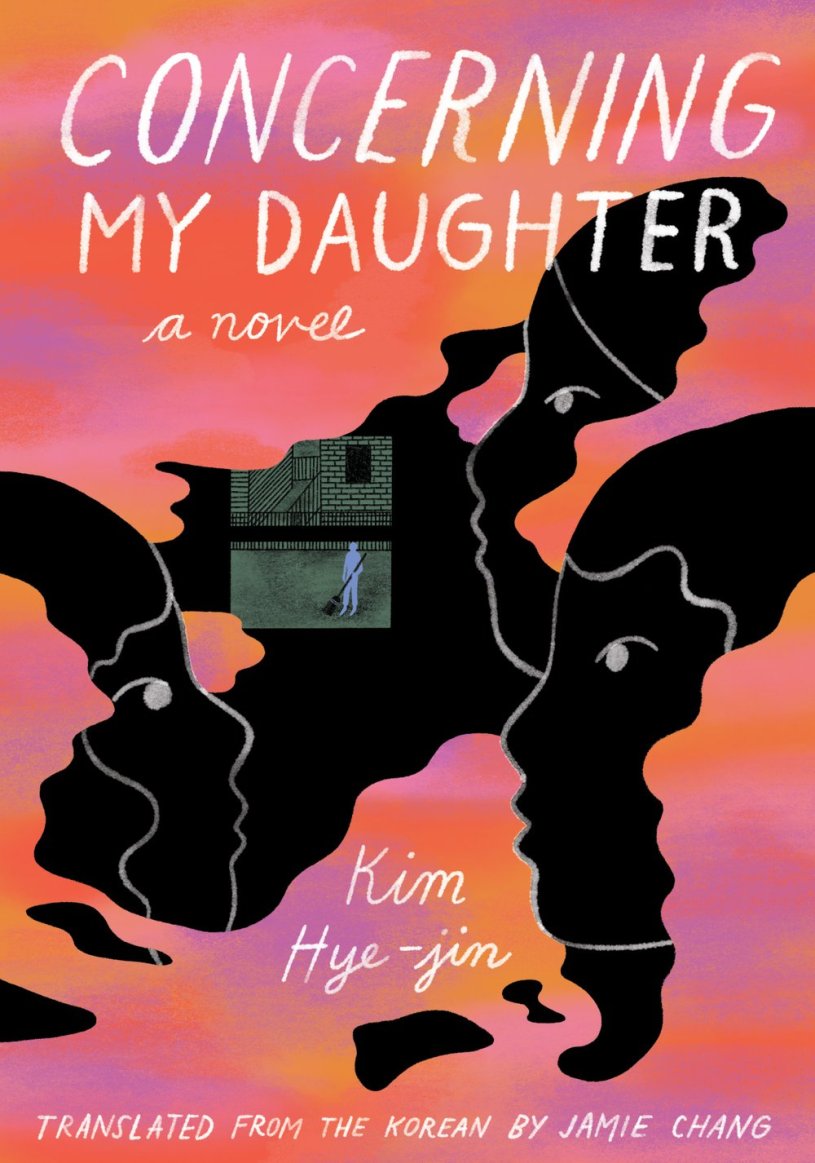
Concerning My Daughter,
by Kim Hye-Jin
Translated by Jamie Kang
(2017, translated 2022)
Picador
One of the more striking elements of Kim Hye-Jin’s Concerning My Daughter is its paucity of dialogue. The story is told through the eyes of a widow who makes her living as a caregiver in a home for the elderly. Overworked and underpaid, she manages to maintain a small home by economizing, and she keeps her spirits up through her devotion to caring for a woman who won international acclaim as a fundraiser and humanitarian. Her world is disrupted when her estranged thirty-something daughter arrives one day to explain that although she was just holding her life together as a gig worker or teaching adjunct at a variety of universities, her support of a strike against her current employer has left her unable to pay rent. Could she move home, temporarily? And could she bring her lesbian partner? In our current economy, the need for an adult child to move home is very familiar, as are the conflicts that inevitably arise. Despite her loathing for her daughter’s “lifestyle,” the mother agrees, her daughter returns home, and she and her lesbian partner find a narrow perch on which to live. Though living in close quarters, the women barely communicate at all. Leafy is away most of the day, but as a chef, Lane’s schedule aligns more closely with the mother. Lane is gentle, patient, and caring. She does not push a relationship with Leafy’s mother; instead, she cooks and helps with household chores. She exercises a kind of soft power on the emotionally unavailable mother, and one could imagine that Lane’s long game will eventually soften her inflexible resistance to her daughter and her lover. Meanwhile, the student strike becomes more intense. Outside conservative groups begin counterprotests, and one evening violence erupts, and Leafy is injured. Though the mother and Lane join in rescuing Leafy and supporting her recovery, the mother continues to maintain her emotional distance. Through it all the mother remains very much in her own head, cycling through anxieties that have plagued her from the moment that her daughter first came out. What if the neighbors find out? When will her daughter grow out of this phase and marry? How can her daughter be so unfilial? If her daughter does not have a child, what will happen to the family? Who will care for me in my old age? What causes my daughter to be “that way” when there is no social benefit to anyone? How can her daughter be so selfish? Kim shares a tale full of ironies. For example, the mother can’t understand why her daughter protests and risks her career and life for others, yet she agitates for better treatment for the women at the elder care center and uses her own resources to help the socially responsible elderly patient. Throughout, her daughter is a kind of phantom, and Lane tiptoes about, gracefully placing meals crafted with love before the mother. Will the old woman relent?
“It helps to think of Lane as someone who delivered my daughter’s things on a scorching hot day such as this. I offer her a glass of water with ice. The circular pieces of ice in the glass knock together to make plinking sounds. In jeans and a white T-shirt, Lane looks three or four years younger than my daughter. The fringe is stuck to the sweaty forehead. Where on earth did my daughter find someone like this? At a time when everyone her age is looking for a healthy, successful prospective husband, where did my daughter and this Lane start to go wrong?”
 East Asian Literature in Translation