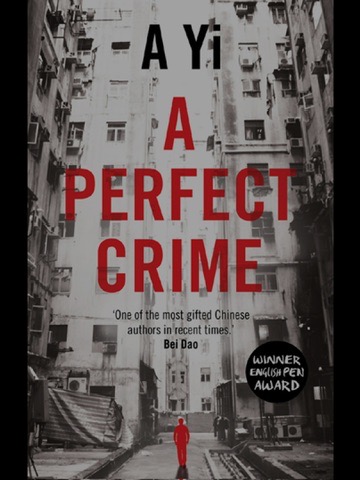
A Perfect Crime
By A Yi
Translated by Anna Holmwood
(2012, translated 2013)
Oneworld Publications
(Crime Novel)
A Yi served five years as a police officer before moving on to journalism. He is a highly regarded novelist working in the genres of crime and detection. In the ironically-titled A Perfect Crime, A Yi focuses the irrational, short-sighted and grandiose thoughts of a mentally ill young man. The tale is set in a cold, dirty, and lifeless city, and at its center is a maladjusted outcast who might just be thinking of gaining a bit of fame by murdering his best friend. As in Japanese author Fuminori Nakamora’s Thief or The Gun, we’re in the mind of a man who is in the process of plotting, executing, and fleeing a crime, but this half-thought-out escapade features none of the existential philosophizing of Nakamora’s pickpocket or the palpable madness of his gun-toting college boy. A’s killer is a coward and a wannabe hard man who kills an acquaintance more out of convenience than malice, all the while fantasizing how his every move will baffle those who might wish to bring him to justice. He congratulates himself his plans, feints, and flight, but nothing he chooses to extend his lead on the police–if he choose at all–is anything more than a dodge that was a stale trope in TV cop shows from the previous century. A Perfect Crime is the perfect antidote for those scratching their heads about the current Dahmer phenomenon and America’s tendency to turn the most heinous of criminals into pop idols. A Yi reminds us on every page that the criminal mind is broken, desperate, bored, fatally self-isolating, and fundamentally incapable of genius. Expect no flourishes in this tale where the success of the pragmatic, world-weary police force is never in doubt. A is relentless in demonstrating the entitlement and solipsism of the killer: even when captured and facing the ultimate penalty, the naive murderer petitions for permission to overrule his own defense attorney, with predictable results.
“A new wanted poster had gone up, the face of a coarse middle-aged man with droopy eyes who’d killed seventeen people. In the corner beside it was a small poster, a side dish to his main course: a young man who’d murdered his classmate. He may have only had one victim, but he looked more creepy, his hair fluffy, his beard stubbly, dressed in a dirty T-shirt, biting his cheeks, his chin turned up. His expression was detached, yet provocative. It was the first time I’d seen myself in three weeks.” (86)
 East Asian Literature in Translation