
The Naked Tree
By Keum Suk Gendry-Kim
Translated by Janet Hong
(2023)
Drawn and Quarterly
(Graphic Novel)
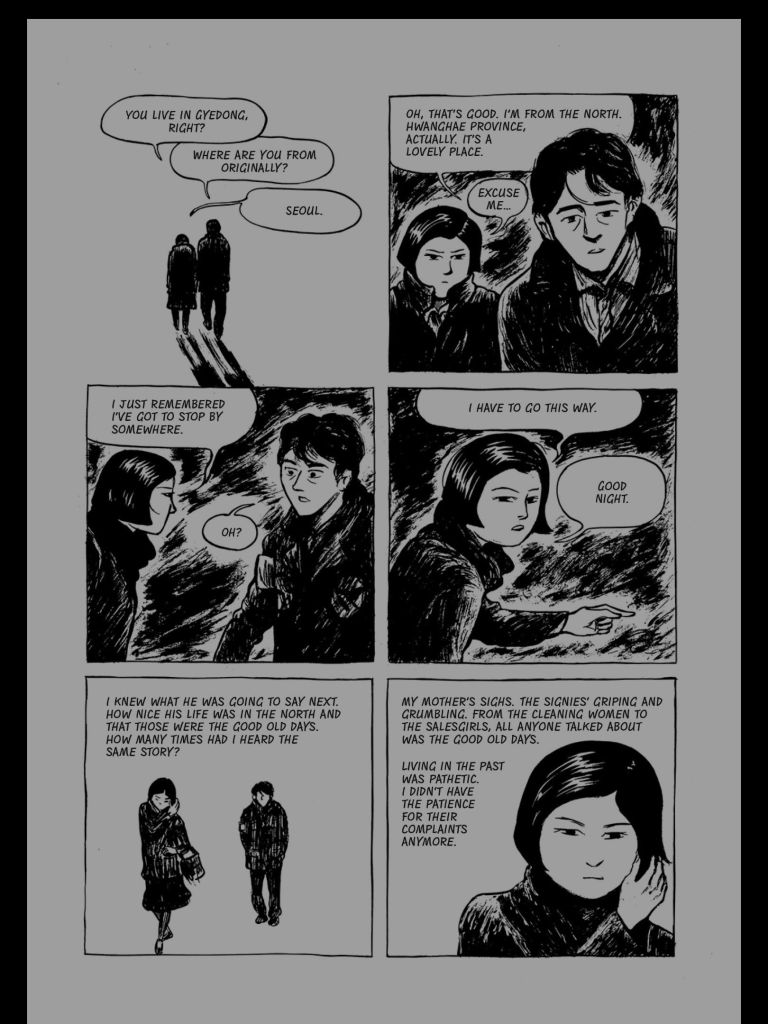
Keum Suk Gendry-Kim is the author of the graphic novel Waiting, rooted in a middle-aged daughter’s efforts to help her mother find the sister she lost in North Korea in the chaos of the Korean War. In The Naked Tree, Keum turns once again to the history of the peninsula in the 20th century. Her new graphic novel is a tribute to one of Korea’s most iconic writers, Park Wan-suh, who, at forty years of age, published her first novel, The Naked Tree. Published in 1970, the story is set in Seoul of 1951. The narrator, eighteen-year-old Lee Kyunga, makes her living as a salesgirl in an American PX. With her rudimentary English, she tries to convince G.I.s to part with a few dollars to have their girlfriend’s snapshots painted on cheap rayon scarves marketed as pure silk. She lives with her mother, a woman traumatized by the loss of her husband and unable to offer hope or love to a daughter who is starving for any kind of emotional connection with the world around her. Desperate, she pursues a relationship with an older married artist, an earnest apprentice electrician, and a dangerous American serviceman. Keum retells Park’s sensitive and brutal story through the medium of the graphic novel. She elevates several of Park’s recurring symbols, such as artist brushes, the overly-made-up faces of young women competing for the attention and cash of American soldiers, and a wind-up whiskey-drinking monkey that draws the doomed lovers, Kyong and Ok Hui-do, like a siren on a stormy sea. Keum’s writing sounds authentic, believable, and faithful to the text. She also captures the darkness and despair in Park’s depiction of a Seoul where the streets are always empty, frozen, and black. Keum does more than bring a powerful novel to life for a new generation of readers. In her reimagining of the author’s life and her decision to become a writer, Keum invents a frame story that begins in 1969 with Park Wan-suh reading aloud to her husband from a newspaper obituary announcing the death of the real-life artist Park Su-geun. In Keum’s vision, Park Su-geun’s tragic death as well as his body of work is Park Wan-suh’s inspiration for revisiting her memories of what life in Seoul was like in the 1950s. The device also allows Keum to pay tribute to Park Su-geun’s art and his influence on modern Korean artists.
 East Asian Literature in Translation