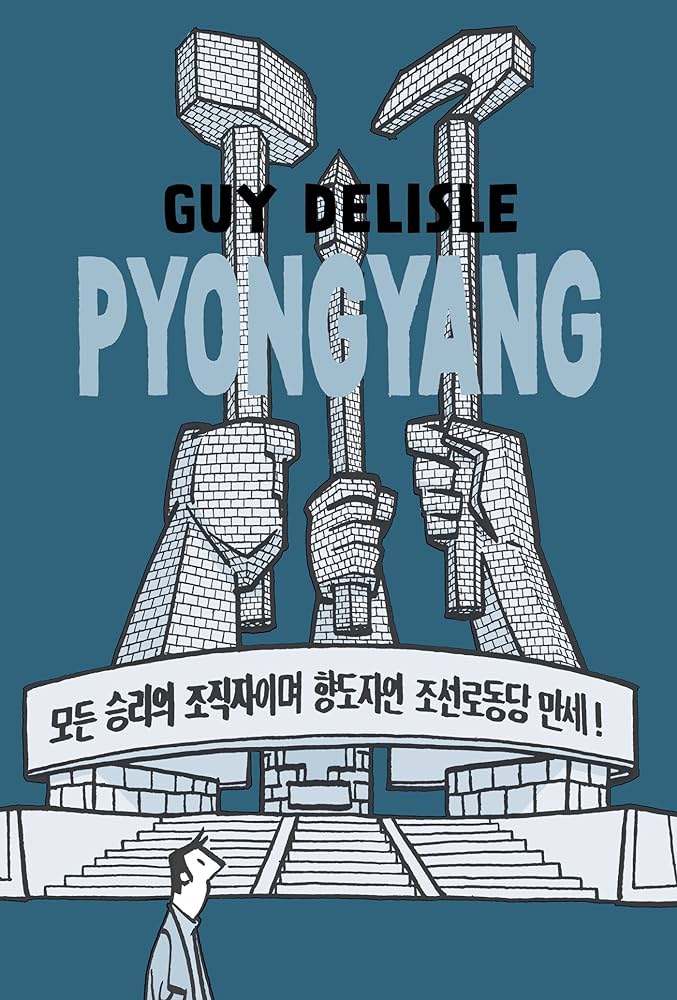
Pyongyang: A Journey in North Korea
By Guy Delisle
Translated by Helge Dascher
(2003, translated from the French in 2005)
Drawn and Quarterly
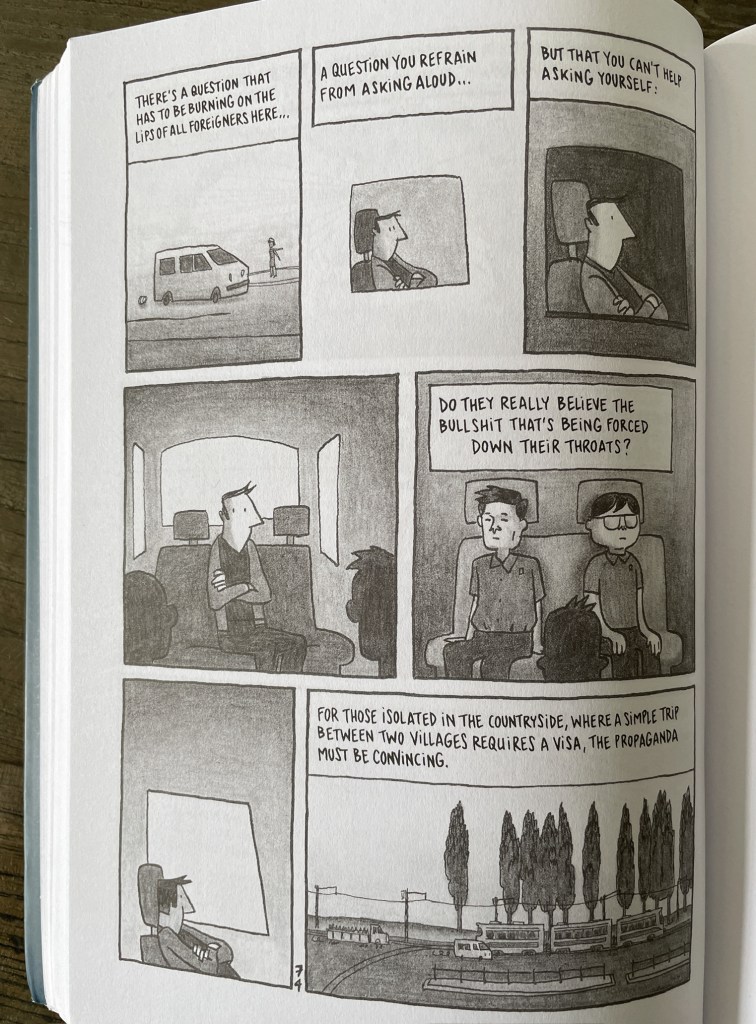
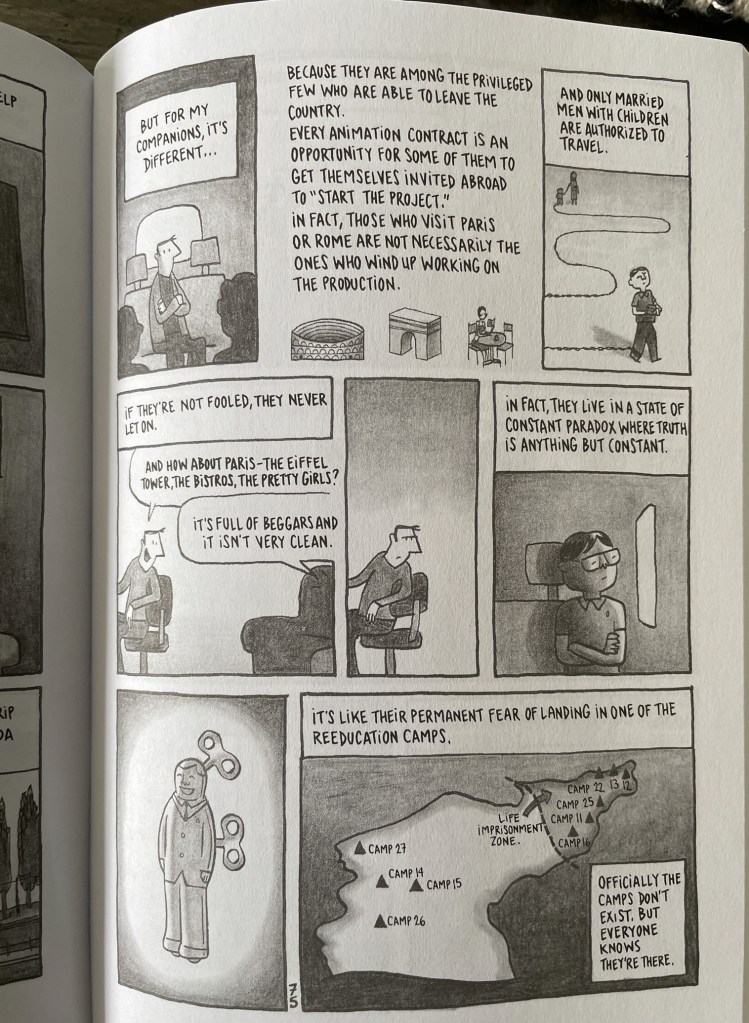
Graphic novels are a remarkable technology. They are capable of telling stories and eliciting emotional and intellectual reactions, subverting or augmenting literariness with “silent” visual coup-de-foudres and stunning juxtapositions. In his hand-drawn travelogue of his two-month-long business trip to Pyongyang, Delisle thwarts the Hermit Kingdom’s obsession with forestalling any attempt by visitors to visually document life in North Korea with photography or video. At the time of his visit, Delisle was an animator representing a French studio developing a new animated series. We learn it is common practice for lead animators to draw “key” scenes in each episode and contract the creation of the “in-betweens” (the task of making all the still drawings that would make a character appear to be moving, for example) to the cheapest studio that could provide the best quality. With globalization, many studios use Korean animation firms, but when Delisle arrives in Seoul to oversee progress on the “in-betweens” he discovers that the work completed will have to be scrapped and redrawn. Having wasted much of their budget, the French studio sends Delisle to have the drawings for the animated series done in North Korea at the Scientific and Educational Film Studio of Korea. His drawings document the challenges he faces trying to communicate his feedback to the North Korean animators; a recurring gag involves Delisle trying to explain the personality and idiosyncrasies of the hero of the project–a comic talking bear– and using mime to demonstrate the cute, awkward, and hilarious movements and facial reactions of his cartoon alter-ego to a stone-faced North Korean audience. Delisle illustrates his life straddling two worlds, one scripted, the other not. His North Korean handlers are with him almost constantly. They take him to see countless memorials to the Kim family as well as The Arch of Triumph, The Juche Tower, The Museum of Imperialist Occupation, and the USS Pueblo, among others. In deserted hotels and restaurants, Delisle meets colleagues and fellow travelers who share their strange experiences and their longing to return home. He documents the day-to-day experiences of living in North Korea, including his increasing sensitivity to what passes as “pop music” blasted from the ever-present single channel: love songs, nothing but love songs praising Kim Jong-il. His drawings capture the emptiness of North Korea, as well as abandoned building projects and the primitive, often dangerous technology they are using to construct new showpieces. Delisle has a great eye for details and contradictions, and he is always a provocateur; the book he brought to read on the trip? George Orwell’s 1984.
 East Asian Literature in Translation