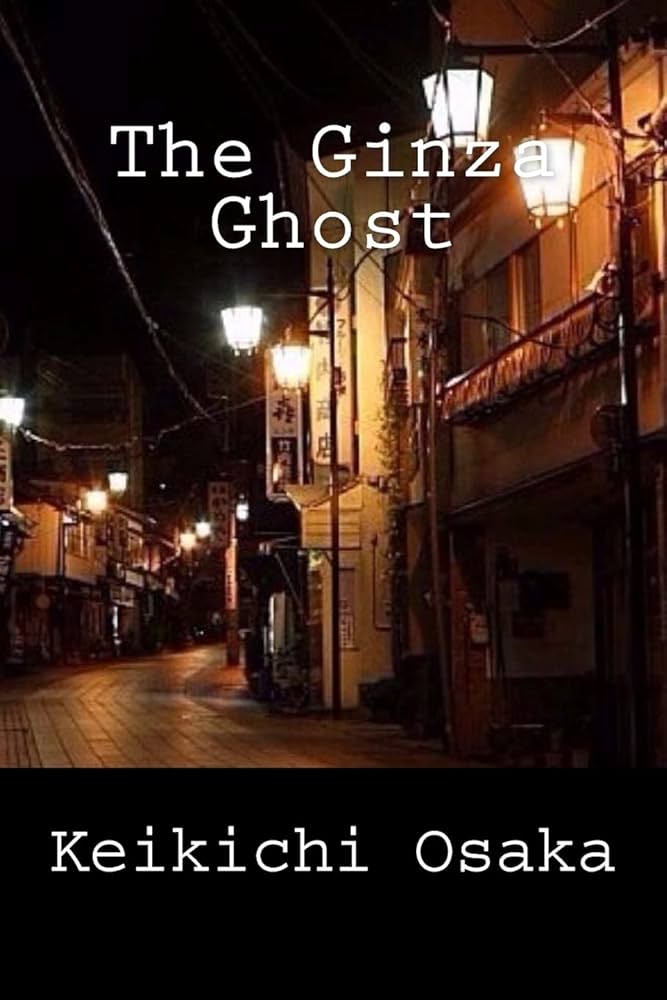
The Ginza Ghost (originally published 1930s, translated 2017)
By Keikichi Osaka
Introduction by Taku Oshibe
Translated by Wong Ho-Ling
(Anthology of Detective Short Stories)
Mr. Osaka is one of the most famous writers of the golden age of Japanese detective fiction. This collection includes translations of eleven of his most famous short stories. Osaka wrote for magazines. His prose is spare; stories are sixteen to twenty pages long. The introduction by Taku Oshibe provides a biography of the author (Osaka died in his thirties, a casualty of World War II) as well as an overview of his style and a paraphrase of each of the short stories. Stories include “”The Hangman of the Department Store,” “The Mourning Locomotive,” “The Monster of the Lighthouse,” “The Phantom Wife,” “The Mesmerizing Light,” The Cold Night’s Clearing,” “The Three Madmen,” “The Demon in the Mine,” “The Hungry Letter Box,” and “The Ginza Ghost.” Like Edogawa Rampo, Osaka is intrigued by optics and optical illusions. He also is fascinated by man’s interaction with technology, and in many of his stories, his witnesses and victims are keenly aware of Japan’s supernatural legends. The crimes all involve “locked room” scenarios. Like Poe and Edogawa Rampo, Osaka delights in the macabre. Unlike Poe, Osaka’s language is direct, the setting is sketched out quickly, and the reader is left to wonder at the motivations of both the detective and the criminal. At the end of each story, the reader is compelled to reread the text and contemplate the clues and the significance of the tale. Standouts in the collection are “The Hangman of the Department Store,” “The Monster of the Lighthouse,” “The Three Madmen,” and “The Ginza Ghost.”
“The private mental institution run by Doctor Akazawa stood on top of Akatsuchiyama, a small hill near the outskirts of M Town, amidst a thicket overlooking the road which led to the crematorium. It was an old-fashioned one-storey building, resembling a large spider crawling on the ground. Ill fortune never comes alone, they say, and indeed, even before the unbelievably atrocious incident occurred, a sinister miasma had already spread within the wooden walls of the Akazawa Mental Hospital. As the foundations of the institution were, by then, infested to the core, destruction was inevitable.” (“The Three Madmen”)
 East Asian Literature in Translation