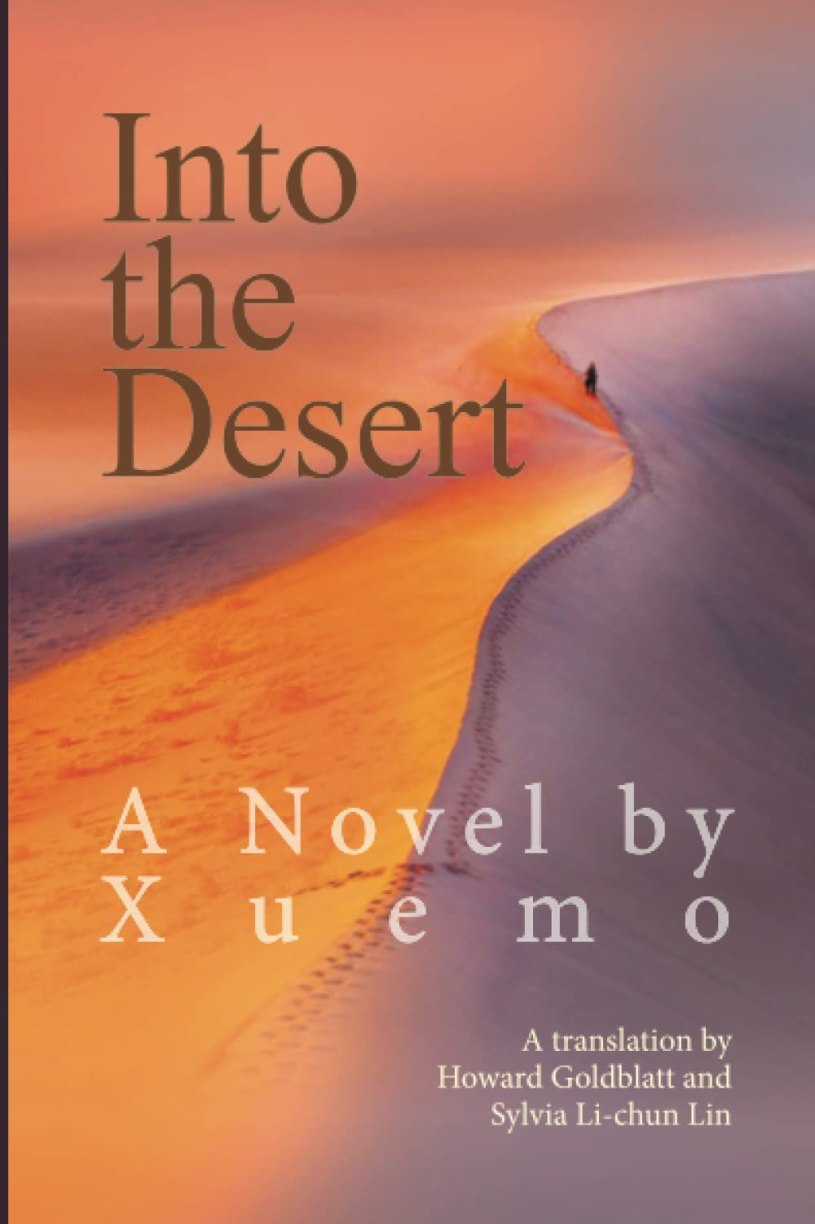
Into the Desert
By Xiaomu
Translated by Howard Goldblatt, Sylvia Li-chun Lin
2020, translated 2022
Long River Press
Under Deng Xiaoping’s “Reform and Opening Up” policy, China in the 1990s was a period of significant social and economic change. Within the ring roads, life was changing dramatically; Chinese citizens were experiencing previously unimagined opportunities to improve their lives and even reinvent themselves. Although acclaimed novelist Xuemo sets Into the Desert in the 1990s, he turns his eye away from the social dynamism of the major cities to focus on the experiences of two women, sisters-in-law, Lanlan and Ying’er remote village on the edge of the Gobi Desert. Their lives seem to have been untouched by the political upheavals of 20th century; people travel primarily on foot or by camel, and hunters use muskets alongside rifles. Matchmakers, fortune tellers, and shamans wield great influence. Sold in marriage some nine or ten years ago, their lives and futures are in crisis. Ying’er married the sickly, soft Hantou; though she loves him, she is deeply ashamed that she has brought no heir to his family. Lanlan married Bai Fu; profoundly ignorant and addicted to drink and gambling, he physically abuses Lanlan every day of her life. At the start of the novel, Lanlan’s oldest daughter dies of exposure and she insists on a divorce from her husband. Her parents-in-law vow that they will only agree if Lanlan surrenders her baby girl to them. When Ying’er’s husband dies of cancer, she must be married immediately to a repulsive and abusive butcher. Desperate to escape their fates, the two women gamble on a high-risk solution: they will borrow camels and trek across the desert to a salt flat, gain employment there, purchase as much salt as they can carry, and then sell it in the village. If the plan works, Lanlan will be able to keep her daughter and Ying’er will be able to marry her true love. Xuemo chronicles their desert trial with exquisite and harrowing detail as they contend with packs of jackals, starvation, dehydration, and a hostile environment. When they at last reach the salt flat, they are excited to find other women working there and make fast friends while performing hard labor under brutal conditions. Worse, the camp boss, unsurprisingly nicknamed “The Dirty Old Man,” and his best employee begin to pursue Ying’er. She barely fends off an assault, and eventually the competing interests of the two compel the women return to the desert, the village and their fate. Xuemo renders the private thoughts of the two heroines beautifully, balancing their individual traumas with their secret strengths. The more traditionally feminine Ying’er dreams of renewing a secret romance, while desert-savvy Lanlan relies on pragmatism and lore passed onto her by her father. Xuemo, who is an active Buddhist, endows Lanlan with an intense commitment to the faith; she finds solace and strength in her belief and shares her enthusiasm with Ying’er. Xuemo excoriates the conduct of virtually every man in the novel save for Lanlan’s father, and he is equally savage in exposing the selfishness and greed of the two mother-in-laws. He leans into open satire of China’s morally bankrupt entrepreneurialism by alluding to the get rich schemes of the village headmen who monetize the ruins of a recently discovered Buddhist temple.
To create the cohesive, dramatic, and appealing publication Into the Desert, Howard Goldblatt and Sylvia Li-chun Lin selected passages from Xuemo’s Desert Trilogy – Desert Hunters, Desert Rites, and White Tiger Pass. The lion’s share of the desert adventure appears originally in White Tiger Pass; Goldblatt and Lin use elements gleaned from Desert Rites to bring to life the complex back story of these two remarkable women.
The truth was: she’d considered divorcing Bai Fu even before learning of her brother’s illness; the exchange marriage was no longer a consequential matter to her, and she refused to be controlled by fate. After going through so much, a girl grows to be a woman and eventually opens her eyes to her destiny. She lives but once, and when it is over there is nothing left. Lanlan had often questioned herself whether the man before her was worth spending her life with. If he had been, she’d have stayed with him; if not, she needed to make a different choice. Otherwise, she’d have wasted her life. That happened to many women she knew, and she refused to join their ranks. She wanted to live for herself, if only for a few years, a few months, even less than that.
 East Asian Literature in Translation