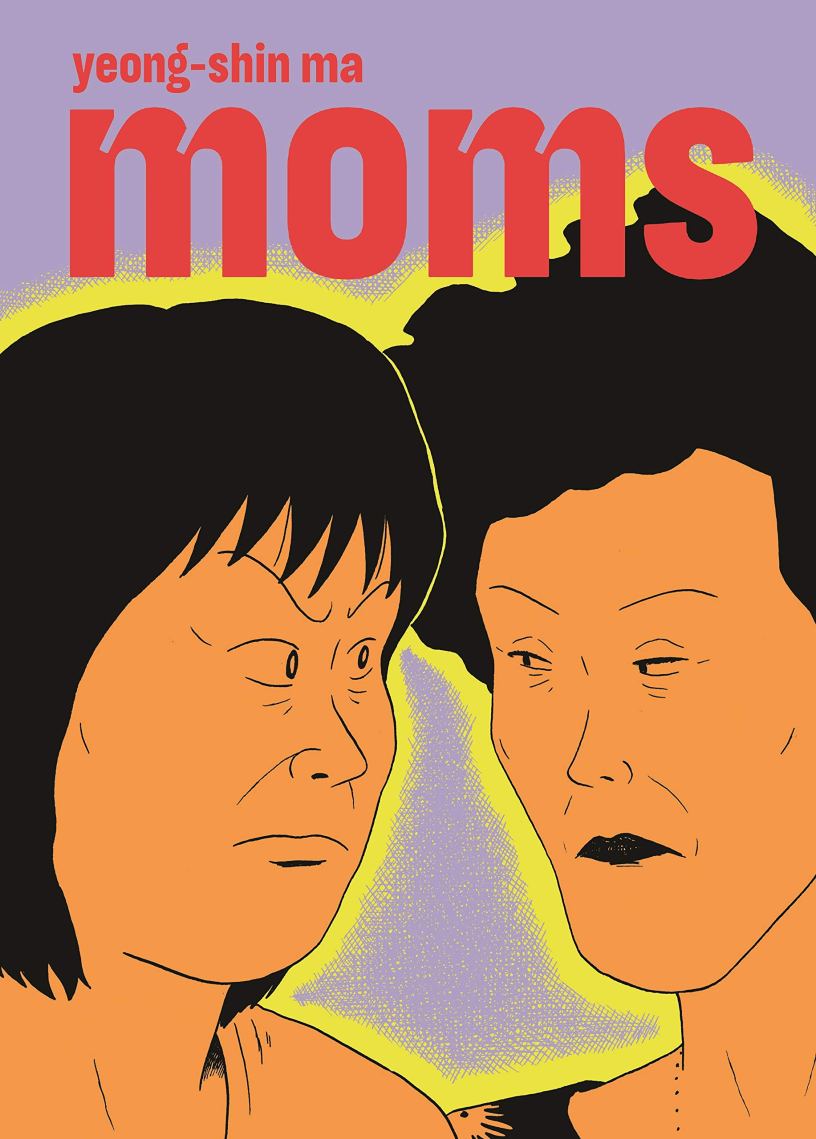
Moms
By Ma Yeong-shin
Translated by Janet Hong
2020, translated 2020
drawnandquarterly.com
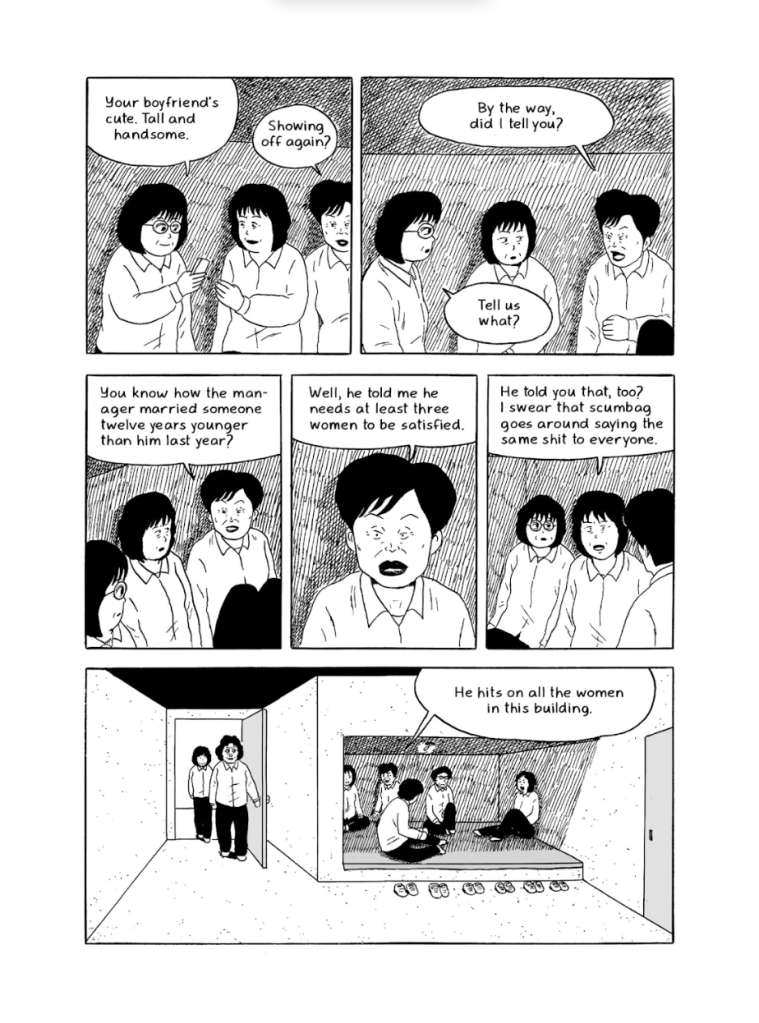
Ma Yeong-shin’s graphic novel Moms gives us a glimpse into the lives of four women who have known each other for a great many years and find themselves on the far side of fifty still struggling to find economic security, romance, and fulfillment after having raised children, supported families and spouses, and suffered the disintegration of their relationships with their husbands. These are exhausted and drained women who have given selflessly and self-destructively to the men in their lives, whether they are two-timing lotharios, exploitative and abusive bosses, or even the author, who writes himself in as a thirty-something would-be-cartoonist who has no job and lives with his mom–the main character. As it happens, when Ma explained to his real-life mother that he wished to write a manhwa about the experiences of her and her friends, she took the project to heart and produced a straight-shooting account of life as a Korean middle-aged woman. If you are accustomed to the tireless effervescence and polished forms of manga or anime illustration, you will be shocked by the social-realism of Ma’s black and white drawings of characters with deeply-furrowed brows, stooped shoulders, and tired eyes. Ma portrays his characters with warts and all; far from perfect, they struggle to turn away the men who take advantage of them and even vie for one another’s lovers. Yet he also portrays the women as self-aware wits who skewer the rafts of shiftless males that come into their orbit; and he does not hold back when he reveals their still-vibrant sexual desires, or the joy they take in lying about their age and dancing at clubs. They are bawdy, foul-mouthed, and hilarious. True, Ma’s social realism comes to the fore when one of the four friends– a career cleaning woman who is forever shown cleaning public toilets– joins an effort to unionize against an employer who sexually harasses and steals from his staff, but his best work is when he portrays what its like for his mother when he finally leaves home, gets a job, and begins doing his Confucian duty: sending money back to his mom. Ma’s rendering of a woman who is alone in her home for the first time in her life and for once isn’t consumed with the anxiety of not being able to meet someone else’s needs is deeply affecting and unforgettable.
 East Asian Literature in Translation