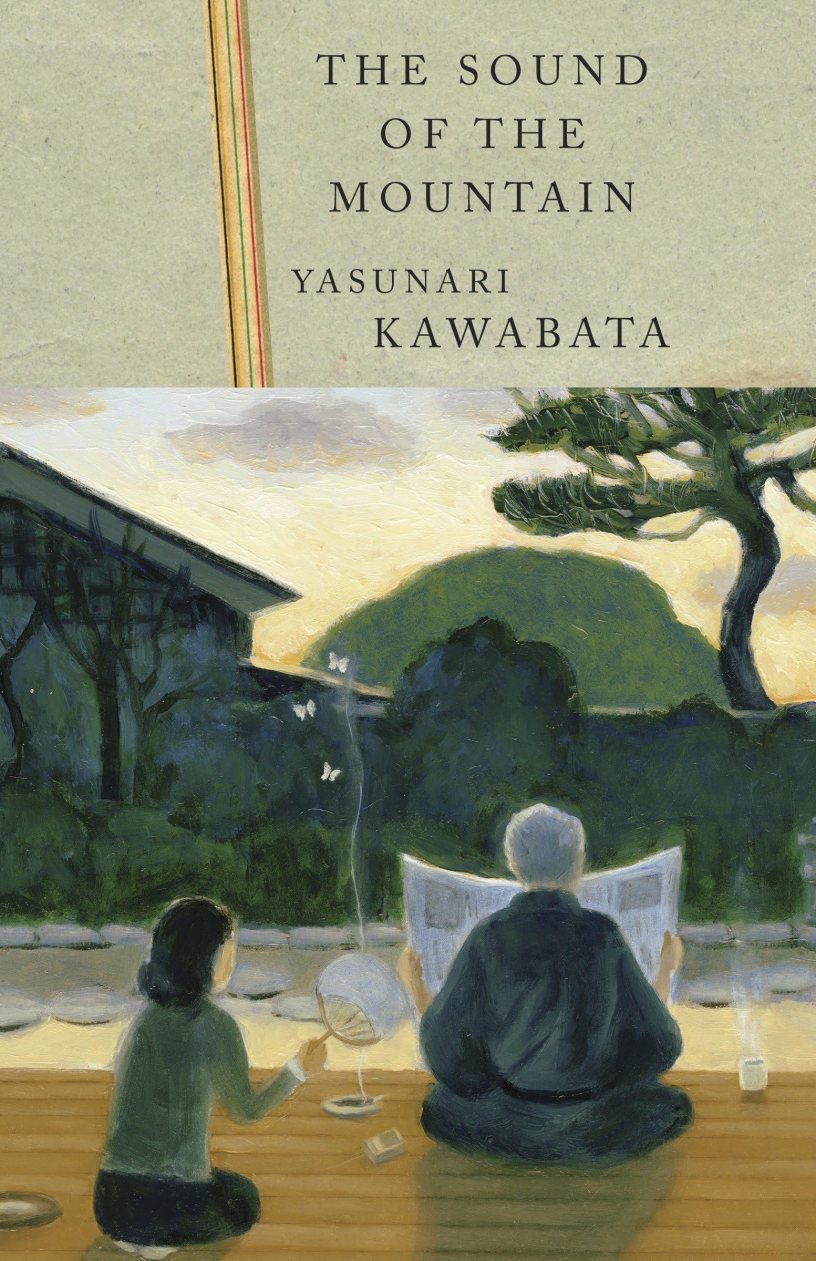
The Sound of the Mountain
By Kawabata Yasunari
Translated by
1954, translated by Edward G. Seidensticker
Vintage
The Sound of the Mountain is a study of the state of marriage in post-war Japan. When Shingo Ogata, a sixty-two year old patriarch begins to suffer bouts of forgetfulness and confusion, he fears that he may no longer be able to count on the retired life he once imagined for himself. Disturbing dreams, often involving old relationships, plague him; when he alone hears the booming of a local mountain, he convinces himself that his time is short. Keeping his anxieties to himself, he reflects on his marriage and his role as a father. Though impotent, he has a roving eye and regards his masculine superiority as a birthright, viewing the post-war world with the hubris of disappointed daimyo. He lusts after his son’s wife and admits to finding his wife and daughter plain and of no special merit. As vain as he is, when he attends the funeral of another friend and wonders aloud whether he may have tuberculosis, he turns an increasingly critical eye on his relationship with his adult children. When his daughter’s marriage disintegrates and she returns home, Shingo bristles at the idea of taking in her and her two children and blames her for losing her husband’s favor. His daughter Fusako takes a decidedly modern stance, blaming him for marrying her off to a man she never loved and accusing him of preferring her brother’s wife over her. While Fusako emerges from the war years as independent and determined to seek her own happiness, Shingo’’s son, Shuichi, is cursed with his father’s sense of entitlement. He disrespects his wife and carries on with his mistress, a war widow. Shingo’s attempts to convince his son to correct his course and repair his marriage merely goad Shuichi on to even more destructive acts of cruelty and depravity. Kawabata leaves us with a stunning depiction of a family in post-war Japan whose collapse signals the death knell of romanticised marriage and family roles and begs the question: where do we look to forge a better way of living?
“I’ve been thinking a little,” muttered Shuichi. “About Father’s life.”
“About my life?”
“Oh, nothing very definite. But if I had to summarize my speculations, I suppose they would go something like this: has Father been a success or a failure?”
“You think you would be able to judge?” Shingo was silent for a moment. “Well, the food this New Year has a little of the taste it had before the war. In that sense you can say I’m a success.”
“The food—did you say?”
“I did. And wouldn’t that be about it? If you say you’ve been giving a little thought to your father’s life.”
“A little.”
“An ordinary, mediocre life that’s come as far as it has, and now it runs into good food at New Year’s. Lots of people have died, you know.”
“True.” “But whether or not a parent is a success would seem to have something to do with whether or not his children’s marriages are successful. There I haven’t done too well.”
 East Asian Literature in Translation