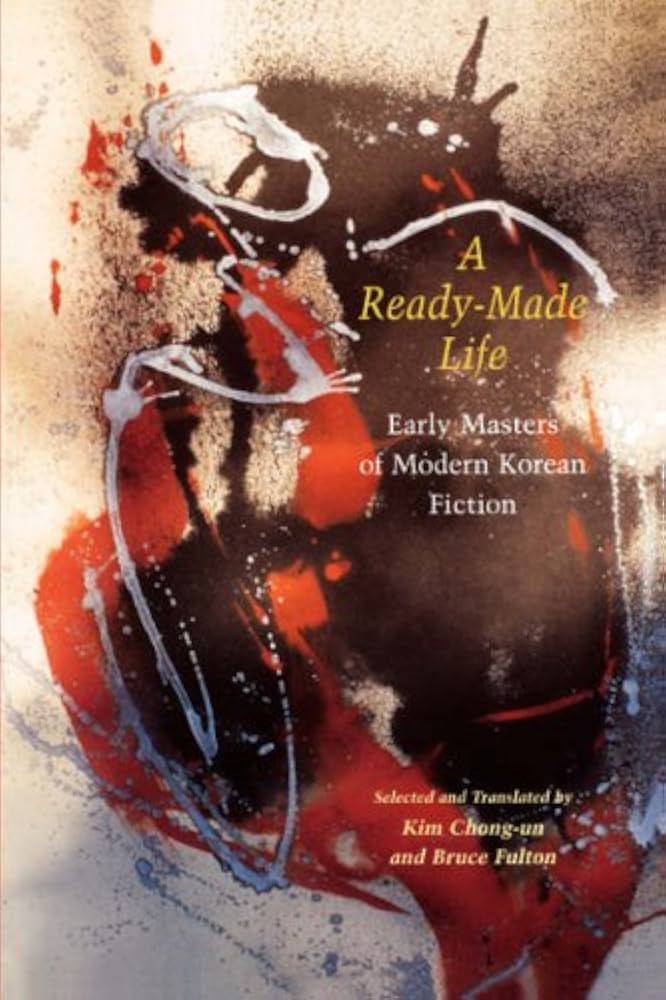
A Ready-Made Life: Early Masters of Modern Korean Fiction
Selected and Translated by Kim Chong-un and Bruce Fulton
1998
University of Hawaii Press
In A Read-Made Life, Kim Chong-un and Bruce Fulton showcase representative and exceptional short stories written by Korean writers in the first half of the 20th century. Written between 1921 and 1943, the sixteen stories represent the work of Korean writers, many of whom attended Japanese universities, who were writing during the Japanese occupation of Korea. Reading the stories, it is important to remember that the authors were writing at a time when it was illegal to publish works in Hangul and essential to avoid direct or even symbolic conflict with the Japanese. The works in this collection were written at a time when the Korean literati regarded the novel form as commercial and inconsequential, opting to capture the spirit of the moment and Korean identity in the short story form. The collection features sixteen stories by sixteen different writers and includes representative works by the founders of Korean realism, Hyon Chi-gon (“A Society that Drives You to Drink”), Yom Sang-sop (“The Rotary Press”), and Kim Tong-in (“The Photographer and the Letter”). The collection also features the work of three writers whose work was banned when they elected to emigrate to North Korea in 1945: Yi Ki-yong, Yi Tae-jun, and Park Tae Wan; their work was not published in South Korea until democratization in the 1980s. Ch’oe Chong-hui is the only woman represented in the collection; the narrator in her short story “The Haunted House” is a single mother and newspaper writer trying to provide stability and shelter for three generations. Poet, playwright, and novelist Chae Man-shik’s contribution, the eponymous “Ready-Made Life,” features the sharply self-critical reflections of an unemployed and possibly unemployable Korean intellectual. Yi-Ki-yong’s fable “A Tale of Rats” offers a pro-socialist worldview championed by a charmingly confident rodent. Other standouts include Chu Yo-sop’s “Mama and the Boarder,” Kim-Yu-jong’s “Wife,” Yi Kwang-su’s “Mystery Woman,” and Hwang-Sun-won’s “The Mule,” which all offer unforgettable insights into the role and status of Korean women in the first half of the 20th century.
Just on the other side of the pass, the road crossed a stream. The plank bridge had been washed out during the monsoon rains, so they would have to wade across. The men removed their loose summer trousers and tied them around their backs with their belts. Half naked, they presented a comical sight as they stepped briskly in to the stream, They had been sweating a moment ago, but it was nighttime and the water chilled them to the bone.
“Who the devil brought you up, then?” Ho asked Tongni.
“My mother did. She had no choice but to remrary, and she opened up a drinking house. But my stepfather was a hopeless drunk–a complete good-for-nothing. Ever since I was old nough to know what’s what, he beat me. We didn’t have a day’s peace. And if Mother tried to stop him, she’d get kicked, hit, threatened with a knife. Our family was one big mess…”
–from “When the Buckwheat Blooms,” by Li Hyo-sok
 East Asian Literature in Translation