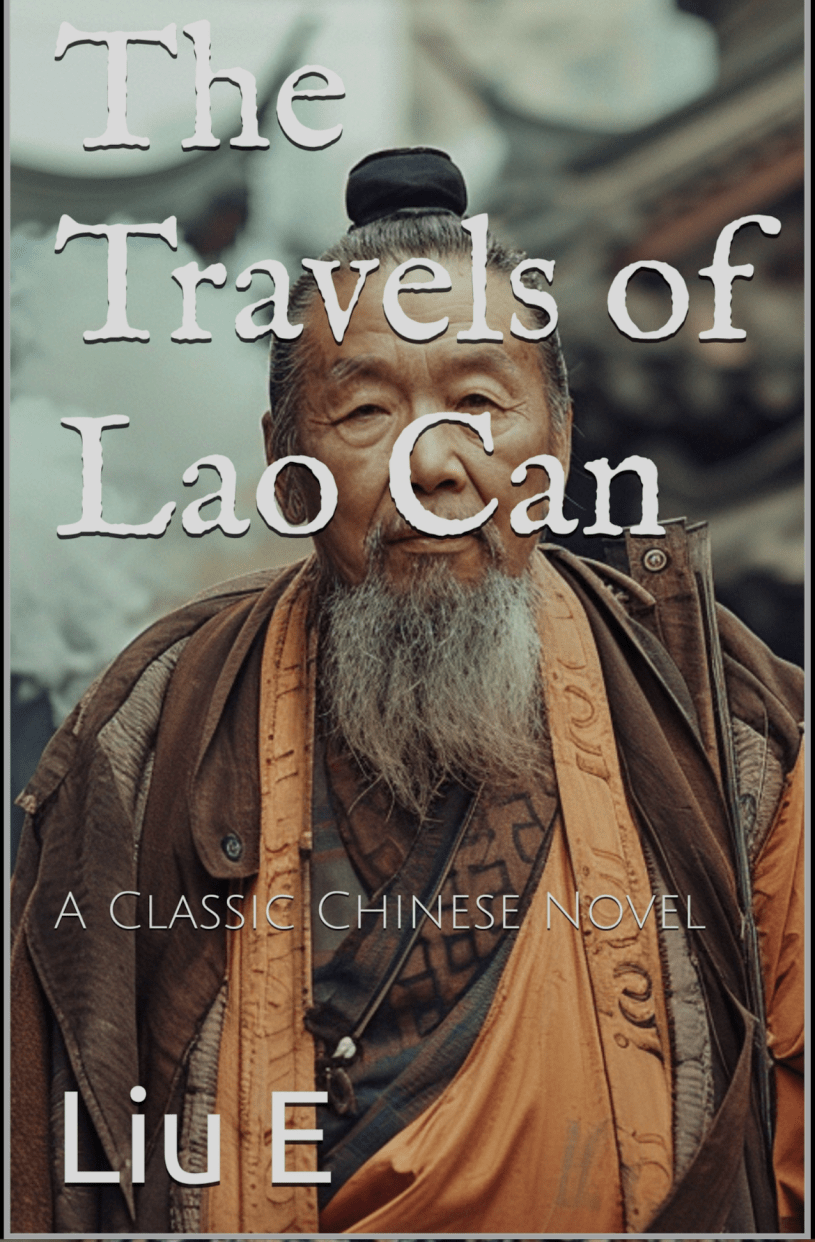
The Travels of Lao Can
By Liu E
Translated by Eamon Kingsley
(1907, translated 2024)
Daybreak Studios
The Travels of Lao Can features the idiosyncratic character of Lao Can, a highly learned doctor of medicine who has witnessed a great deal of history and shares his poignant and occasionally outraged reactions to the decay of Chinese morality and political leadership in the Qing dynasty. In Liu’s preface to The Travels, he explains that throughout all periods of China’s history, grief and pain have compelled great men to write, and claims, “In our present age, we experience feelings of personal, familial, national, social, and religious sorrow. The deeper the feelings, the more painful the tears. It is with these layers of emotion that The Travels of Lao Can was born.” Liu’s hero is all things indeed: a distressed and squalling infant, an admirer of land and cloudscapes, a treasured friend, consummate poet, practical engineer, erudite historian, and tenacious detective. And Liu is clearly using Lao Can to express his own scorching critique of contemporary Chinese society. Lao Can exposes the white lies of his companions and the limits of their philosophical knowledge, but he also goes after much larger fish. He chastizes a leader for trying to eradicate theft by declaring a zero-tolerance policy and hiring an army of violent thugs to enforce his policies and execute rule-breakers. He thinks deeply about the failure of generations of rulers who fail to inform themselves of historical knowledge, leading to decisions in city planning that fail to take into account the significance of flood plains, or worse, attempt to control the paths of rivers. He loves music and delights in the analysis and composition. A chaste man, he nevertheless finds himself in the company of prostitutes, and although his host urges him to enjoy himself, Lao Can asks the young girls to explain how they came to be bound to the brothel-keeper. Their stories lead him to reflect on the cruelty of poverty, the selfishness of parents, and the villainy of men. That episode leads to the discovery that one of the girls is the sole survivor of a mass murder: one day she awoke to find everyone in her family and household was dead, and as she was the only survivor on the scene, she was thought to be the murderer.The Travels of Lao Can morphs again, this time into an engaging tale of detection. What can’t Lao Can accomplish? The Travels is in no way a novel, nor is there any discernible plot. Liu swaps out genres and gives logic the back of his hand with a confident nonchalance and derring-do, and he ends every chapter with a comically stale cliffhanger. The book is best read as a series of allegorical set-pieces. Liu sets the tone with Lao Can’s first adventure, which is actually a dream vision in which he and a friend spend the night discussing philosophy and using telescopes to study the stars. As the sun comes up, the two discover a ship in peril. Despite the distance–the ships are twenty or thirty miles away–Lao Can’s telescopes allow them to witness the chaotic activity shipboard. In an instant, the disaster at sea becomes a transparent and comically rendered critique of the nation’s ship of state, poor leadership, and bad communication. When Lao Can offers the doomed sailors a modern compass, they refuse it, calling it the work of outsiders, perhaps Catholics! Am I wrong to think there is something of Cervantes in this wild and rollicking adventure?
 East Asian Literature in Translation