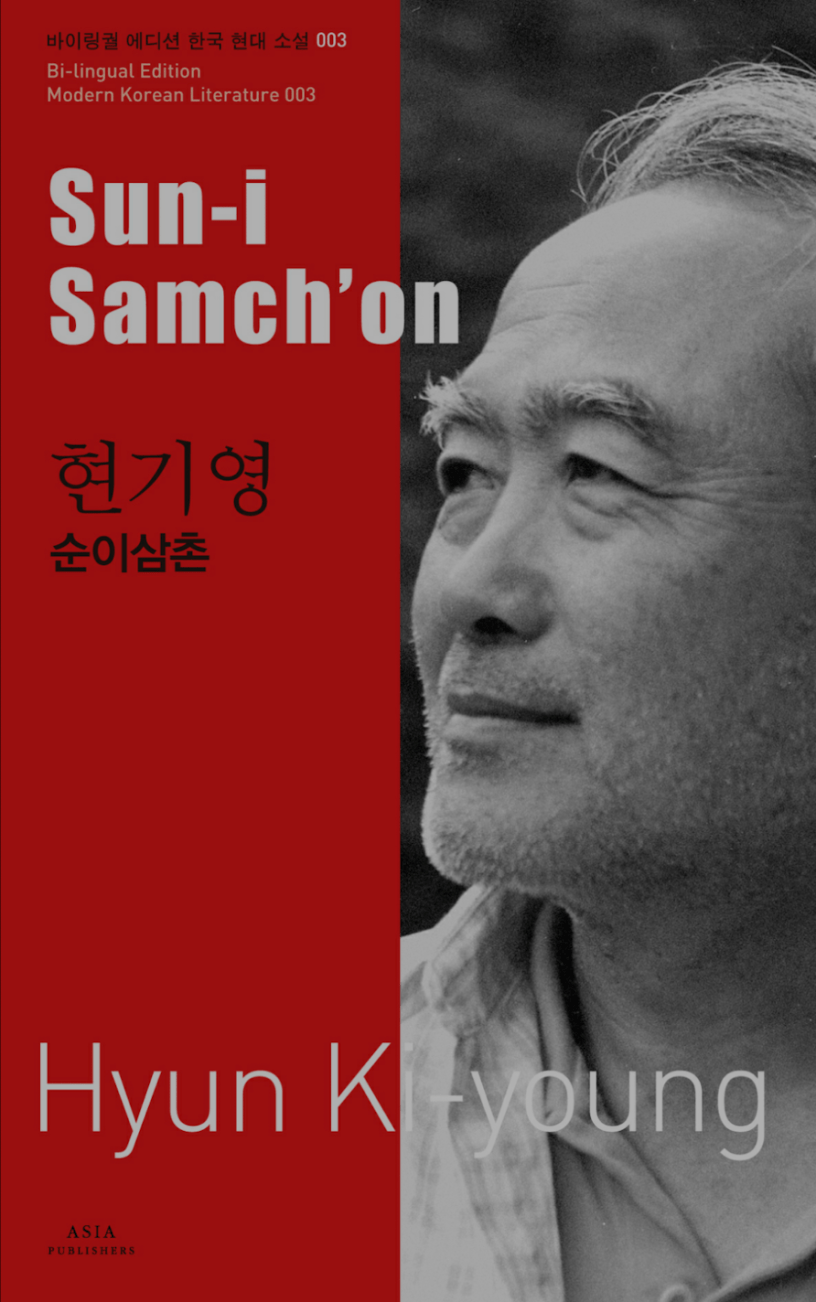
Sun-i Sam’chon (Auntie Sun-i)
By Hyun Ki-young
Translated by Lee Jung-hi
(1978, translated 2012)
Asia Publishers
International readers of Han Kang’s Nobel Prize winning novel We Do Not Part (2021, translated into English in 2025) will be familiar with the horrors of the Jeju Island massacres, an effort to eradicate communist influence on the islandt hat lasted from April 3, 1948 until May 13th, 1949 and which claimed the lives of between 14,000 and 30,000 men, women and children (10% of the population). Readers may not know that the South Korean National Assembly passed a law in 1948 that not only outlawed the Communist Party but also made any public discussion or publication of what happened on Jeju illegal and punishable by physical beatings, imprisonment, or death. Hyun Ki-young’s decision to write Sun-i Sam’chon and publish it in 1978 resulted in his arrest; after three days of torture, he was released after promising that he would never write anything about the massacre again. Sun-i Sam’chon is thus a work of literature and a document of political courage. Hyun’s narrator is a man in his late thirties. He has succeeded in business and made a good life for his wife and children. He is nevertheless running from his past: he fled Jeju many years before, claiming that his upbringing left him with only memories of extreme poverty and guilt. For eight years, he avoided his filial duty to return to the island and celebrate key rituals and participate in memorial feasts; consumed by guilt, he at last decides to make the pilgrimage from Seoul to his hometown, Bukchonri. As he makes his apologies to family and former neighbors, he learns of the recent death of “Auntie Sun-i,” a well-loved acquaintance of his youth and a woman who recently helped his family out by working as a maid for a few months in Seoul. Her passing adds a new depth to the painful yet essential work of this yearly memorial celebration, during which the survivors of the Bukchonri massacre share their memories of the afternoon when police and members of the Northwest Korean Youth Corps rounded up every member of the town, set fire to their houses, and shot five hundred of their neighbors to death. Hyun’s writing is direct, and though his primary intent is to document the crimes and the complexity of what occurred in Bukchonri, he infuses his work with beauty and grace. He focuses particular attention on the unique dialect spoken on the island. The narrator finds himself slipping back into this mode of expression and rejoices as he recalls words and expressions that he had not used in years. The dialect also becomes an important signifier and a point of contention when a man who married into the community when he came to the island thirty years ago uses it to establish his bona fides and his membership among the townspeople. Most importantly, the back and forth of the guests–testimony, really–allows the readers to see that speaking their truths about political crimes and state-banned topic are essential to the mental health of the survivors and the source of the abiding strength of the community.
“Now, Nephew, what’s the point of digging up again and again what is done and past? Isn’t that how things go down in a war?”
For a split second, I thought I glimpsed a youthful Northwest Youth Corps member from thirty years ago in the face of my fifty-something Uncle. A chill raced through my heart. I suddenly felt a sharp pang of resentment.
Furtively handing out Western candies, the Northwest Youth Corps members—turned-police officers would coax kids my age to reveal where their fathers and brothers were hiding. The kids didn’t know any better, so they pointed time and again to their relatives in the bamboo groves, beneath the paneled floors, or in the tunnels under the cowsheds and among the stacks of millet straw. When an eighty-year-old man refused, under interrogation, to say where his escapee son was, the policeman from the Youth Corps threatened his young grandson with a gun and forced the child to slap his kneeling grandfather in the face.”
 East Asian Literature in Translation