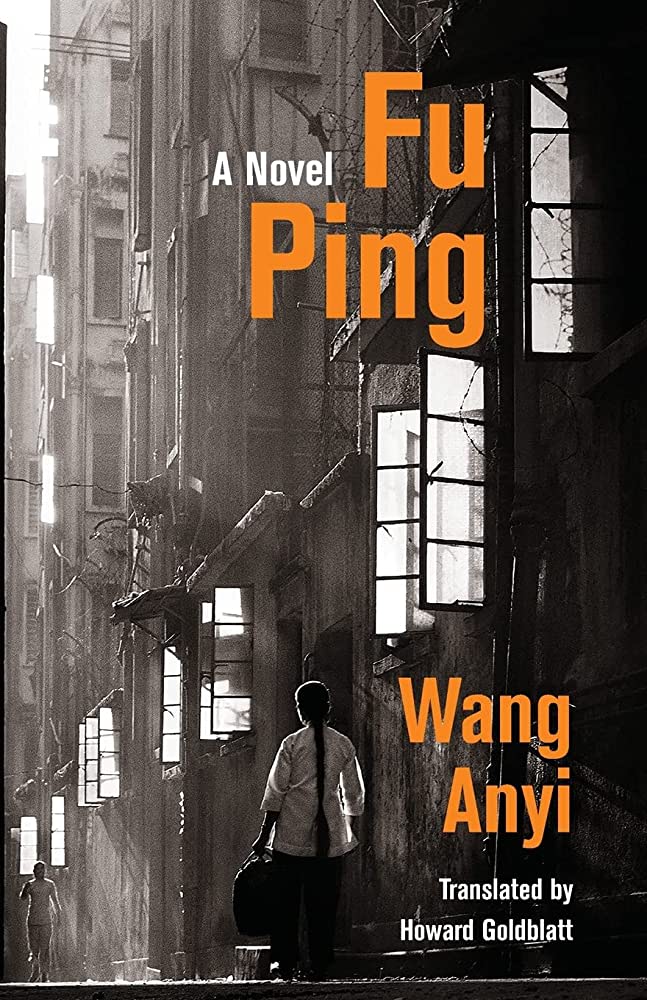
Fu Ping
by Wang Anyi
Translated by Howard Goldblatt
(2003, translated 2019)
Columbia University Press
(Novel)
Ms. Wang was inspired to write Fu Ping after a visit to Yangzhou in 1998. The journey to her home causes her to reflect on her childhood in the early days of the Chinese Republic. In particular, she is struck by the intensity of the influence of her childhood nanny and confesses that before speaking Mandarin or Shanghainese, she spoke the Yangzhou dialect of her nanny. Fu Ping is a vivid portrayal of the many characters Wang remembers from her early youth. Though nostalgic, Wang does not shy away from presenting realistic portrayals of the city’s poor. She is a master of creating vivid, multisensory settings. Some of her most vivid descriptions include her rendering of markets, fabric stores, and even the garbage scows and rough homes of Fu-Ping’s aunt and uncle, whose livelihood requires them to transport night soil out of Shanghai each day. Yet she can also organize an entire story out of a few square feet of land that backs up against the fence of a school for girls, which allows her protagonist to eavesdrop on the lives of the private school students. There are no earth-shaking conflicts here; readers looking for direct commentary on or even evidence of the Cultural Revolution will need to look elsewhere. Most of the drama occurs at the familial level, with a focus on efforts to find appropriate husbands and wives for each character. Fu Ping allows us to see how those with and without family find their place in this collective society. The strategies are farseeing and the negotiations pragmatic and intense. One childless couple adopts an awkward toddler, the third son of a distant relation who will be raised at home before he is mature enough to be sent to Shanghai to apprentice as a carpenter to his “grandfather.” If his apprenticeship works out, one day he will take care of his new grandparents in their old age. Another must gamble: should she marry the literate scow owner who has a mother and older brother to feed, or stay out of the marriage market for another year? Fu Ping herself must tread carefully, as she does not want to be married off too soon to a man with poor prospects. As a central figure, a woman, and a servant, she is an odd character on which to base a novel. She is remarkably willful and contrarian. She is cruel to the woman she calls NaiNai (grandmother) and lies to her aunt. Perhaps the enduring lesson is that the people of shanty towns, longtang lanes, and shikumen houses continue to open their hearts to her in spite of her emotional rigidity.
“Nainai had lived in Shanghai thirty years, virtually all the time on or near Huaihai Road in the flourishing Western District. Like all residents of a city’s urban core, she viewed the quieter outlying districts as inhospitable countryside. In reality, those outlying spots, such as Zhabei and Putou, were where others from her hometown had congregated. Most were boat people who had come down on the Suzhou River as a result of wars or natural disasters…But Naiinai would not associate with those people. She had acquired the urbanite’s prejudice of viewing only Huaihai Road as the true Shanghai.”

