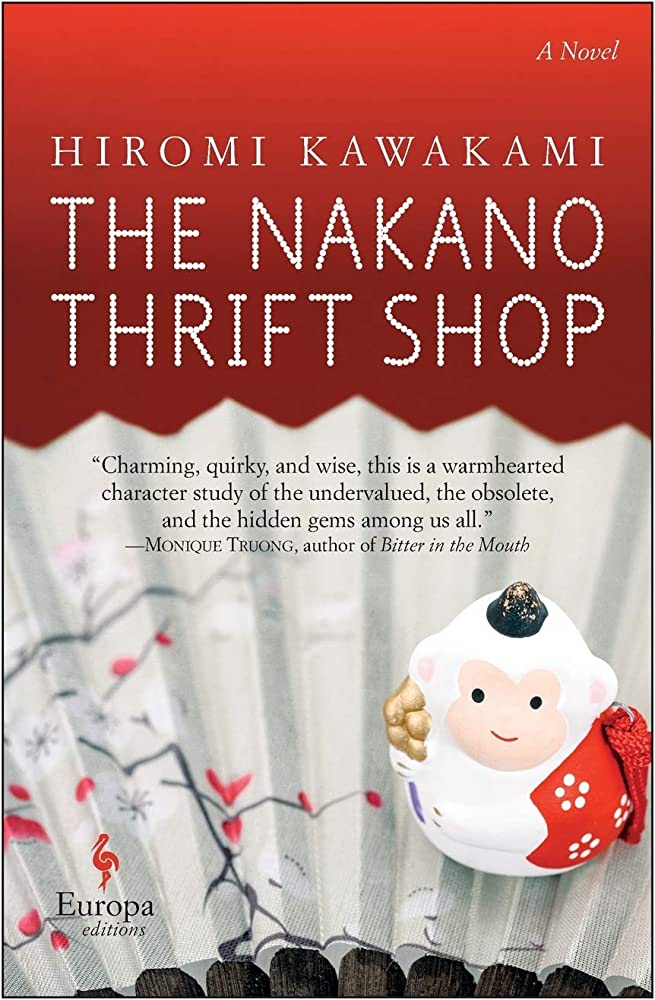
The Nakano Thrift Shop
By Kawakami Hiromi
Translated by Allison Markin Powell
(2005, translated 2017)
Europa Editions
(Novel)
The Nakano Thrift Shop sells lightly-used, cheap household items and the occasional tchotchke. Savvy dealers know better than to waste their time hoping to come across a rare find at Nakano. Couples, penny-pinching students, and the down-on-his-luck salaryman might stop in to laugh into their hands about a tacky curio, pick up a cheap fan, or assemble a dinner service for one. The business model is moribund, but the owner is dedicated. The staff is, well…perhaps, if you’ve ever been lost, chipped around the edges, of uncertain value to yourself and others, you might recognize them. They kill time around the mostly customer-less shop dusting and repositioning merchandise in the front window. They are generous in their efforts to care for and protect the items that Mr. Nakano saves from the trash heap. On any given day Mr. Nakano may be out with the van and Takeo, making a pickup from a client who is emptying out an old closet or moving house. Mr. Nakano was in corporate culture until being humiliated; he turned his back on the culture, opened his store, and never looked back. Takeo is a moody high school dropout. Dark, quiet, and the owner of a maimed finger, he might pass as yakuza. In truth, Takeo was bullied throughout high school, and he quit when his abuser maimed his hand in a door. Mr. Nakano’s sister, Masayo, a single woman in her fifties who creates abstract art and lives off of family rental properties is a regular, and Mr. Nakano’s ex-wife pops in with surprising frequency to check in on the business. The narrator, Hitomi, is the cashier at the center of this family-like cast of characters. She is clearly smitten by Takeo, but like the items on the shelves, all of the characters seem to be in a state where they yearn to be chosen but cannot themselves choose. The store attracts a loyal cast of repeat customers and strange items which lead to even stranger discoveries. The novel is sly, warm, and patient, willing to wait for all those who shelter beneath Mr. Nakano’s roof to sweep the dust from behind the door and begin anew.
“With its second-hand goods (not antiques), Mr. Nakano’s shop was literally filled to overflowing. From Japanese-style dining tables to old electric fans, from air conditioners to tableware, the shop was crammed with the kind of items found in a typical household from the 1960s and later. In the mornings, Mr. Nakano would raise the shop’s shutter and, with a cigarette between his lips, he’d arrange the goods intended to tempt customers outside the front of the store.”
 East Asian Literature in Translation