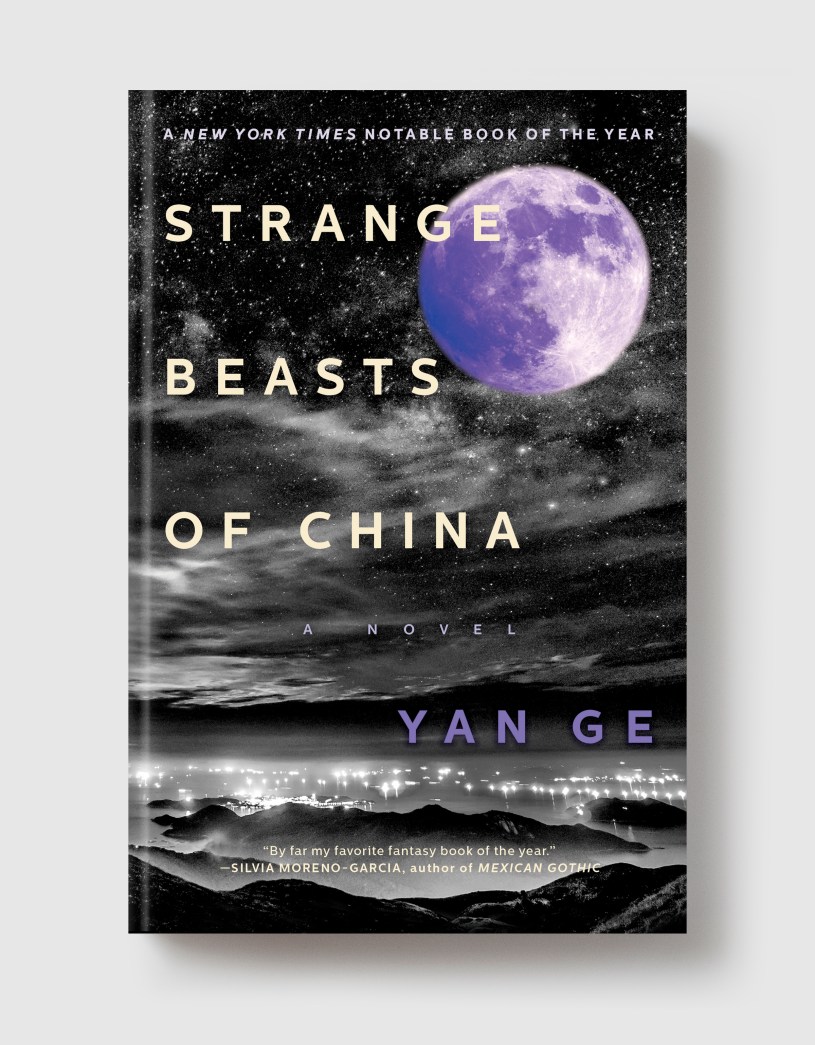
Strange Beasts of China
By Yang Ge
Translated by Jeremy Tiang
(2020, Translated 2021)
Melville House
Novel
Yan’s protagonist is a lonely grad student who whiles away her nights in a favorite bar, smoking and drinking too much and wondering about the professional and personal life of the professor she is assisting. In this work of speculative fiction, she is living in contemporary China, but her field of study is cryptozoology, and unlike everyone’s weird uncle, she is not hunting Bigfoot. She is a researcher who studies the reports of fieldworkers and professional interrogators who pursue Chinese cryptids, humanoid creatures who can survive among the Han majority by clinging to the shadows. Her world is dark and mysterious, and though the genre is science fiction, the mood is definitely noir. The hero has reached the age where she has begun to rethink the essential questions driving her research, and her personal life has her doubting if she is part of any community, visible or invisible; hence her long hours of solitary drinking at bars known to be meeting spots for cryptids on the move. Yan introduces us to a new beast in each chapter, outlining its anatomy, diet, behavior, and methods of courtship and reproduction. In some cases, she is able to contact and interview these margin-dwellers and, in others, aid their movement through a world that would be happy to cage them or place them under a microscope. Each story follows a familar, scientific order, revealing her training but also the repetitions that are often associated with folklore and the oral tradition. Yan’s heroine is a scientist who has made the mistake of falling in love with the stories told by the specimens she encounters. She aches with empathy for the general mythologies and lore of these hidden tribes as well as the unique stories individual stories cryptids share with her. How different are these creatures from China’s other minorities or marginalized people, some acknowledged, some not? Each chapter in the novel could be a standalone short story, though there are some characters who reappear in later episodes, and there remains a great deal of mystery about the head of the program, who seems to be forever on the mind of the lonely investigator.. Will he and his junior researcher become involved? Will he even be around to hear his student’s final report? Yan’s earlier novel, The Bean Paste Clan (2018) is a chaotic, comical, and brassy family portrait painted by an over-sharing narrator who seems happiest when we blush. Strange Beasts is a colder, more cerebral world. The hero is creeping about at the base of a monolithic society that could not care less about her work or her happiness. People like her seek out the dive bars and watering holes at civilization’s edge, knowing that the only truly moving stories in the contemporary world are about rumored, dying, or lost tribes, and the rootless individuals who walk among us, yearning for a return.
“Yong’an City has countless beasts, some identical to human beings, some truly monstrous. At university, I’d seen many pictures of them in my professor’s office, even perspective-free images of long-extinct species from antiquity. Yet none ever stirred me as much as this one. The joyous beast in the photograph looked directly at the camera, terrified yet smiling, strangely like myself.” (25)

