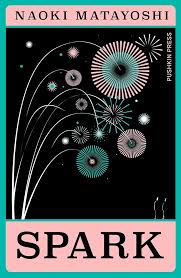
Spark
Matayoshi Naoki
Translated by Alison Watts
2015, translated 2019
Pushkin Press
Spark is a record-breaking bestseller in Japan and a beloved J-drama series about the trials of young comedians as they seek employment, recognition, and fame. They specialize in the manzai genre, a performance in which two comedians, one who plays the part of the boke fool, while the other embodies the role of the tsukkomi, the impatient and quick-to-anger straight man. They compete for a single microphone. Their stock in trade is absurdities, fast-paced wordplay, exaggerated emotions, and slapstick, often free-styling or riffing on concept. The author, Matayoshi Naoki, is a famous manzai artist: for many years, he played the fool in the comedy team Peace. The narrator of this fast-paced novella is Tokunaga, a young man who dreamed of becoming a comic since high school. When we first meet him, he and his partner, Yamashita, are performing as “Sparks” and fighting for their lives to gain the attention of anyone at an overcrowded festival. Exhausted and defeated, they stay to watch the next act, “The Doofuses,” who, despite also failing to capture the audience, stun twenty-one-year-old Tokunaga, who recognises in Saizo Kamiya a fearless performer who will say and do almost anything that might challenge his audience or expand the range of the manzai genre. Certain he is in the presence of a genius, Tokunaga looks up to the senior comedian, who is just twenty-four, and the two enter into a sempai/kohai relationship that lasts for ten years. Not surprisingly, the two are deeply lonely and full of anxiety about their choice of careers. They torment themselves and each other by constantly critiquing every element of their performance. Though their conversations are hilarious and often brilliantly absurd, they can’t quite stop performing as boke and tsukkomi. As a male of the species, their inability to express themselves and share their hopes and fears resonates deeply with me, as does their haunting self-doubt. Over time, their banter transforms into anger and bitterness, and eventually they find themselves crying in public. Matayoshi never allows the story to turn maudlin. The two heroes are well defined, and each shares qualities and points of view that are idiosyncratic, sometimes perverse, and not a little concerning. They are anything but balanced; in a culture that rewards self-effacement and commitment to family and career, their obsession with the craft of embodying the absurd often pushes them beyond the pale and into madness or self-destruction. Spark is one of the most affecting and memorable comedies I have had the chance to read. I did not expect to be so caught up in this story, nor did I anticipate that this novella would help me see myself in such a forgiving light.
“’In these pleasant surroundings, it was fun to sip our coffee and laugh about the feverish scene in the park a short while before.
That then led Kamiya to start philosophizing: “The essential thing, Tokunaga, is to disrupt things. Disrupt the colourful, beautiful world, and another unreal, more awesomely beautiful world will appear all on its own. That dude in the park had a radical instrument, but he wasn’t doing anything with it. An instrument like that has to be taken seriously. There’s no beauty in a world where it isn’t. I dunno how he got that instrument, but somehow he did, so now he owes it to the world to play the hell out of it. You can’t just go through the motions—it has to be done with total heart.” And then he sipped his very expensive coffee.’”

