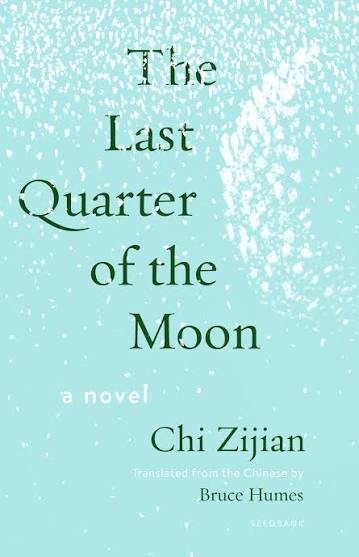
The Last Quarter of the Moon
Chi Zijian
Translated by Bruce Hume
(2013, translated 2013, 2026)
Milkweed Editions
The narrator of Chi Zijian’s The Last Quarter of the Moon is a powerful elderly woman born into an indigenous tribe of nomadic reindeer herders, the Evenki people of Northen China. Ninety-years old and the widow of the last Clan Chieftain, she tells the story of her life in the mountains, forests, and rivers of Manchuria. Managing herds of reindeer, the Evenki live their lives by hunting squirrel and bear and fishing in icy streams, regularly visiting the Russian border to trade their goods for bullets, tea, salt, tobacco, and baiju. The Evenki live in small bands consisting of a tight mix of family units, living in shirangju, collapsible shelters made of hides and wood. They move three or more times a year, following the reindeer who graze the land searching for the mosses that nourish them. Each of these communities is required to have a headman and a shaman, and both are responsible for the health and welfare of the people and their animals. The narrator records the intimate history of her clan, chronicling the births and deaths, great romances and doomed love affairs, marriages and remarriages, heroic hunts, domestic tragedies, epidemics, and the encroachment of modernity on their traditional way of life. They fear the Russians because of their bloody past, and they keep the Japanese at arm’s length when, in the 1930s, they flood the region with troops in their war against the blue-eyed Russians and conscript Evenki men, training them to work in reconnaissance for much of the year and releasing them at key times to manage the herd and hunt. The narrator and her people learn of the Communist and Cultural Revolutions, aiding refugees, hearing of deadly purges, and encountering sent-down youth. Eventually, Chinese efforts to exploit the forests of the region and bring the Evenki into permanent cities and towns prove to be the most destructive to their tribes cohesion, health, and culture. Chi’s narrator captures moments of great cruelty, tenderness, and fury. Death comes frequently in her world. At times violence comes like a lightning bolt, at others, omens presage great calamity. Then, the only thing to do is to support the shaman in their days long combat against death. And what happens when a shaman dies? The tribe waits and observes. Before long, signs will come. A person’s behavior will change. They will stop speaking of the things of this world, and soon they will come to take up the heavy spirit drum and spirit dress. Despite the many tragedies that haunt the latter half of the novel, the narrator persists in embracing the beauty she encounters every day. And though she is illiterate and the Evenki have no way of recording their language, she still finds a way to make her mark in the world by painting her visions of the world on the great white stones of the rivers where she and the reindeer drink.
“When she made her appearance there were gasps of surprise. Those in the party that had come to send off the bride, and were thus unfamiliar with Tamara, exclaimed at her beauty, while the rest of us marveled at a certain new aura about her.
For so long, she had carried herself stooped, her neck bent like a criminal, her head buried in her chest. But at that moment Tamara held her head high; her back was straight and her eyes shone brightly, and we wondered if we weren’t looking at someone else. Rather than saying she was wearing a bird-feather skirt, you might say her lower body was decorated in a swathe of autumn. Those dappled colors seemed to have undergone a baptism of frost. Tamara began to dance, and she was as lithesome as ever. She laughed as she twirled, and I’d never heard her laugh with such a light heart.
Old Ilan lay next to the fire, his head at an angle, watching his mistress with utter devotion.”

