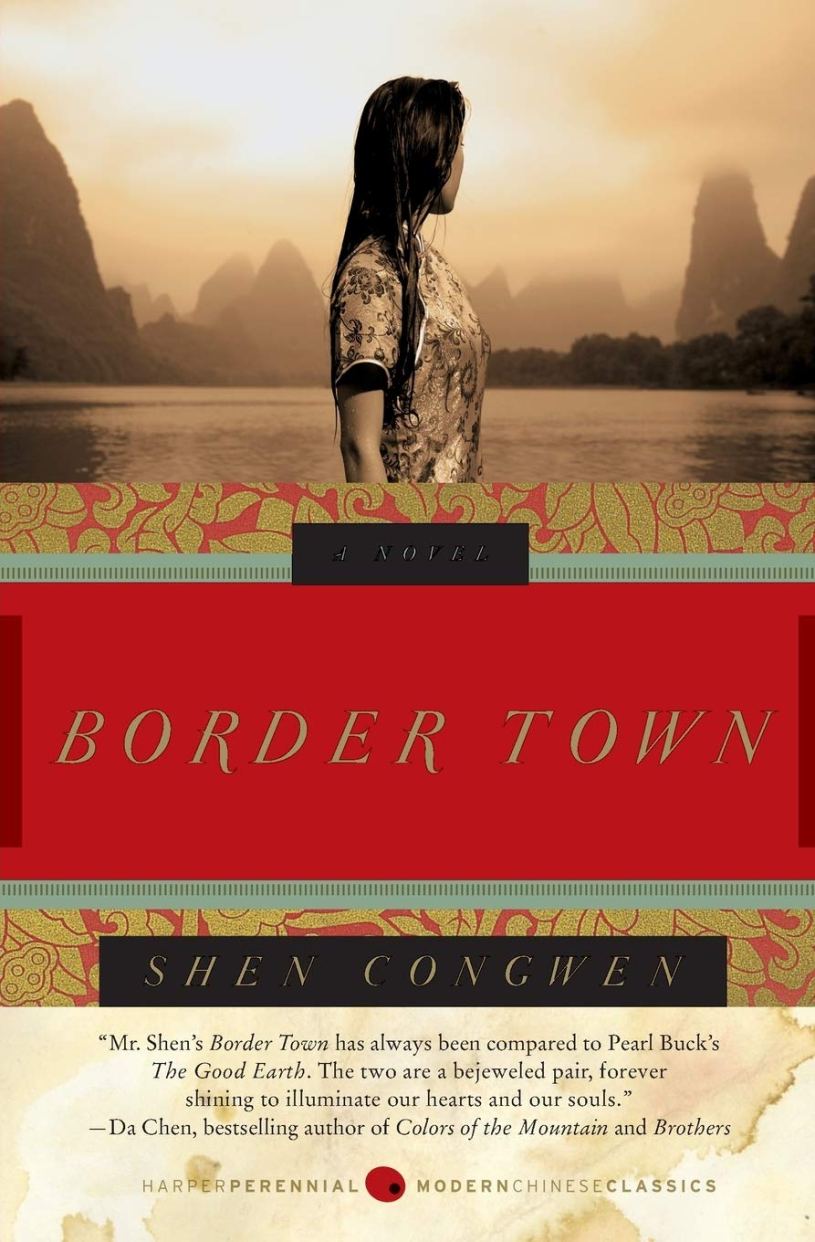
Border Town, by Shen Congwen
Translated by Jeffrey C. Kinkley
Published by Harper Perennial
(1934, translated 2009)
(Novel)
Shen’s lyrical romance was intended to challenge traditions of the novel in China, though today Border Town seems charmingly old-fashioned. And though you might be hard pressed to find an overtly political statement or even a political subtext, Mao banned Border Town because it did not reflect his vision of class struggle (the love triangle features two high caste brothers who fall in love with a low caste girl). Later, Taiwan banned the book, principally because despite being denounced, Shen chose to remain in mainland China. For these reasons, Border Town was almost lost to history. Shen chose to write about the ethnic peoples of his birthplace, West Hunan. The protagonist, the child/woman Cui Cui, is uneducated and illiterate, but she is noble, filial, and pious. She is also “dark” and “dusky” in her beauty; scholars are divided on her exotic origins. Perhaps she is from Miao or Tujia lineage. As in Mishima’s The Sound of Waves, the characters and the land are portrayed as representatives of the nation’s soul; gods and the blessed land collude to create a population that is heroic, united, and pure of heart.
“When No. 1 came the time before, he spoke to me about this and I told him then: chariots have to move like chariots, and horsemen like horsemen, according to the rules. If his father was going to take charge of this, he’d have to have a matchmaker do it according to custom–that’s how chariots move; if he wanted to take charge of it himself, he had to go up into the bamboo grove himself on the bluffs across the creek and sing for you, three years and six months–that’s the horseman’s move.” (92)

