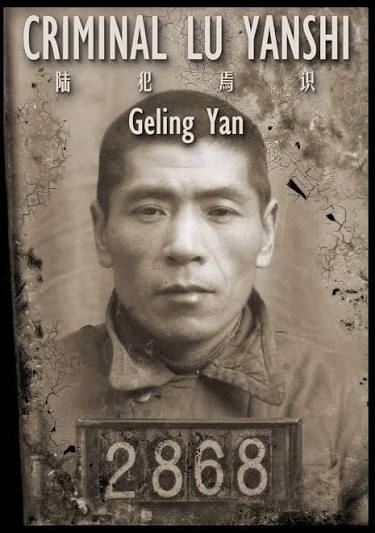
Criminal Lu Yanshi
By Yan Geling
Translated by Lawrence A. Walker
2011, translated 2019
New Song Media
Yan Geling’s Criminal Lu Yanshi is an epic of China’s tumultuous 20th century, centering on the lives of a gifted scholar and his relationship with the woman he is coerced into marrying, an uneducated girl who has only just liberated herself from the ordeal of foot-binding. Yan’s story, inspired by the experiences of her relatives in the Cultural Revolution, is a study in the nature of freedom and love. The reluctant husband regards his impending marriage as the death knell of his spiritual and intellectual being. He submits to the ritual, but leaves the next day to pursue a doctorate in the United States. In the ”land of the free,” he indulges his privilege as a wealthy Chinese abroad. Accepting the roles as a right, he becomes a popular lecturer, a favorite of the academy elite, and an unapologetic philanderer. When he returns to Shanghai, he immerses himself in his work, nurses his longing for the mistress he left behind, and erects an emotional and physical wall between him and his wife. They only ever seem to enjoy each other’s company when they align themselves against the manipulative histrionics of “Gracious Mother.” That marriage would have run its ordinary and sterile course were it not for moments of intimacy that he vows his wife must have stolen from him, and his stunning arrogance, a marriage to intellectual purity that blinds him to the outriders of the coming Revolution. And that is why Yan begins this recursive novel in winter, in a Reform through Labor camp in Qinghai province on the Tibetan Plateau. The land is so inhospitable to human life that the prison, which houses a ragged, frozen, malnourished population of criminals and political prisoners, needs neither bars nor fences. There we meet a man known only as Lao Ji, a sixty-year-old inmate serving a life sentence. It is 1960, and China is in the grips of the Great Famine. Starving, his teeth rotting out of his head, this is criminal Lu Yanshi, the scholar, and he is doing everything in his power to reconnect with his family and the love of his life, his wife, Wanyu. Yan writes exquisitely about the pettiness of intellectuals and the malice of widows. She renders the suffering of the prisoners and their keepers in cutting and grotesque realism, but somehow elicits our empathy, urging us to embrace the difficult, fractious hearts of men who do not know why they have been imprisoned, murderers, thieves, and prison authorities who have come to realise they, too, have been incarcerated by the Party. In a world turned upside down, where children are urged to turn in their parents for political crimes, Yan uses her acute sense of irony to counter rage, surrender, and despair to restore grace to the crowded cell and the marriage chamber.
Suddenly Danjue spoke in English. He did not pay attention to what she was saying: right off he thought that her grammar was good but a bit stilted. Danjue asked him in English if he had heard what she said. Only then did he retrieve the two sentences she had just spoken. Danjue’s first English sentence had been: ‘Please don’t try to contact my mother anymore.’ After that, she had said, ‘If you have even the slightest bit of concern for us, please turn yourself in right away.’
The telephone was hung up first on her end. With the receiver still glued to his ear, he remained seated on the narrow stool in the long-distance phone cabinet. Just as he stood up, the springs of the stool, which had been pressed down by the weight of his body, gave out a “pah!” sound. He convulsively turned his head around and saw it was only the stool rebounding and assuming its original position. Turning back once again, he saw that at some point the telephone receiver had dropped to the floor…”

